
As the biggest search engine in the world (by a mile at 83% according to Statista), Google has a lot of sway when it comes to online searches. And that’s part of the problem believes Rand as the search engine giant can manipulate searches to favour its own content even if you’re the one that’s created it. In some cases, Google can even drive your brand and content down the SERP so you’re hard to find at all (Celebrity Net Worth can tell you more about that!) But there are strategies you can use to get around this. In this talk, Fishkin shares his knowledge of Google as the Trojan horse and reveals 10 great ways to thrive in Google’s world.
← All talks 



Grow Marketing Turing Fest 2017
The State of SEO & How to Survive Google's Trojan Horsing of the Web
Auto-generated transcript - may contain errors. Tap a timestamp to jump the video.
Mike, thank you so much. I'm, we were talking before the session. I think I think I'm gonna try and find a way to get a kilt next year if I come back. I think you haven't seen skinny white legs until you've seen Dewey skinny white legs.
So I'm just just saying. So I I have I have we have a ton to get through and not a ton of time. But before we begin, I wanna say a couple of things. First off, I think it's amazing what Turing Festival has done here in Edinburgh, here in Scotland, to grow from six hundred attendees to twelve hundred attendees in a year.
Just just phenomenal. And and that's down to all of the hard work from the organizers here, and you should be incredibly proud of what you've built. The second thing that I want to say is is that, if I understand correctly, this is the fiftieth anniversary, of the repeal of the law that, that Alan Turing faced himself, the discrimination law that that persecuted him and people like him.
And I think it is a it is a testament that fifty years later we name our technology conferences after a pioneer like him in technology, but also in social progress. And on that vector yes, let's absolutely. And on that vector, there's one more thing that I wanted to bring up.
So I, I've been working with a number of conference organizers, including Brian, and Brian, I I very much appreciate your participation in this, around something that I'm calling Project Event Safe. And there's a website. It's just a landing page right now. But Project Event Safe is designed to make conferences and events like this one and many others around the world, a safer and more inclusive place, particularly for women.
So I will tell you a very brief story. Last year, I spoke at a conference, in the United States, but I won't get into details of exactly where. And, after I left that conference, a couple months later, I got an email from a young woman who had also been in attendance there.
And she was, out to dinner and drinks with some of the speakers. And one of the speakers, that evening assaulted her at the event. And she did manage to get away. She hid in a broom closet of the hotel to get away from this guy.
And she brought it up to the conference organizers, and the organizers said, we will take care of it. We promise. And a month later, she looked on the website, and that speaker was reinvited as a keynote for the next year. And I lost my ****.
That is not okay. That is not okay. We we are not an industry that tolerates that kind of crap. And so, you know, in this specific case, I reached out to the organizers, I talked to them, I said, I'm gonna burn your ******* asses to the ground if this stands, and it did not stand and they uninvited him and, like, we made sure that's okay, but but, this is something I'm very passionate about.
I really appreciate Brian's passion around this and the commitment of Turing and so many other events. But if you would, if you would like to participate, please keep an eye out on projecteventsafe dot com. We'll have some more news around that coming very soon.
Okay. Now, that out of the way, Google. Google. They've been I'm gonna I'm gonna call it Trojan Horsey, but but let's walk through what's happening in Google's world. So we get some awesome, data, and I'm gonna share that some of that with you.
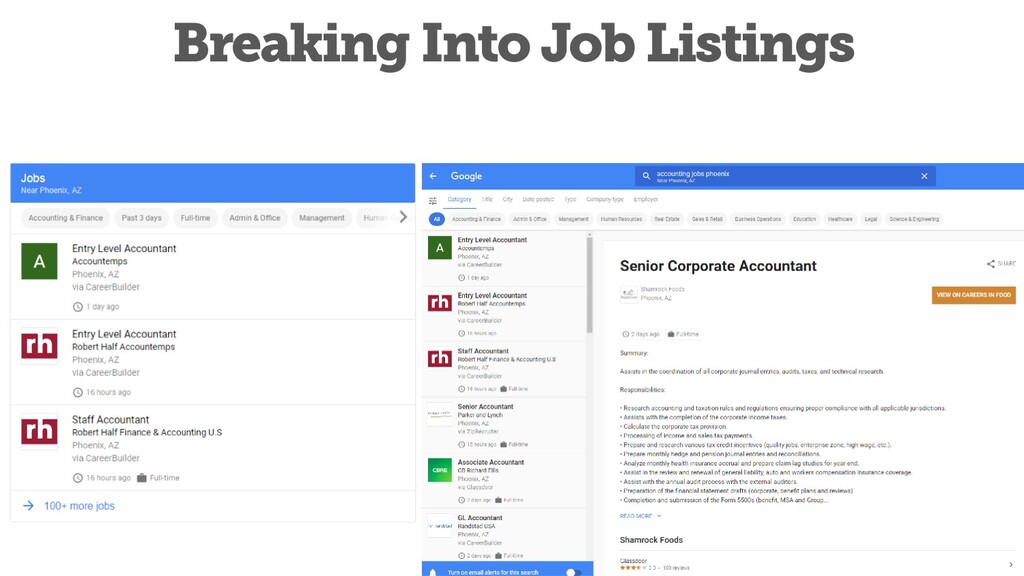
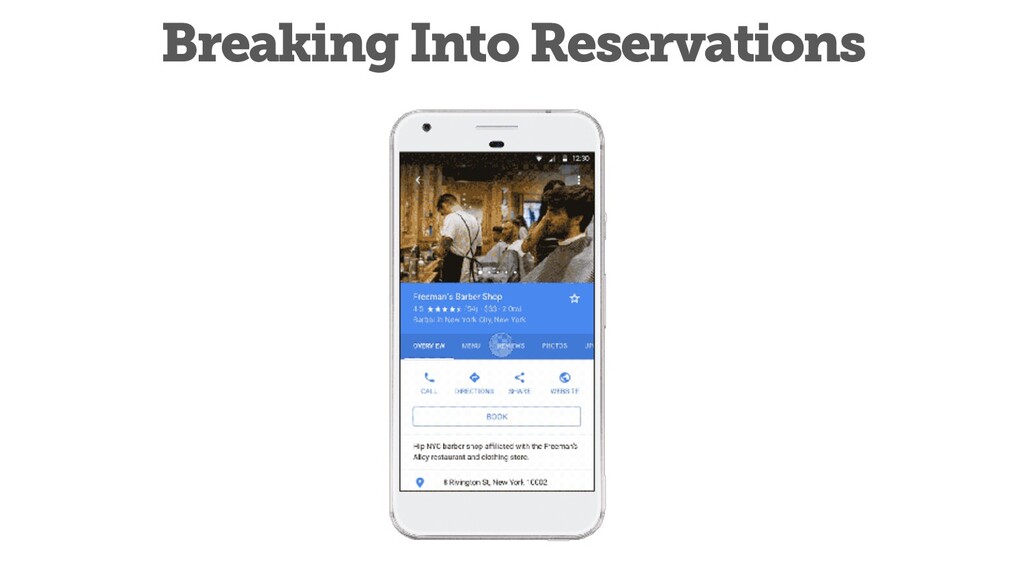
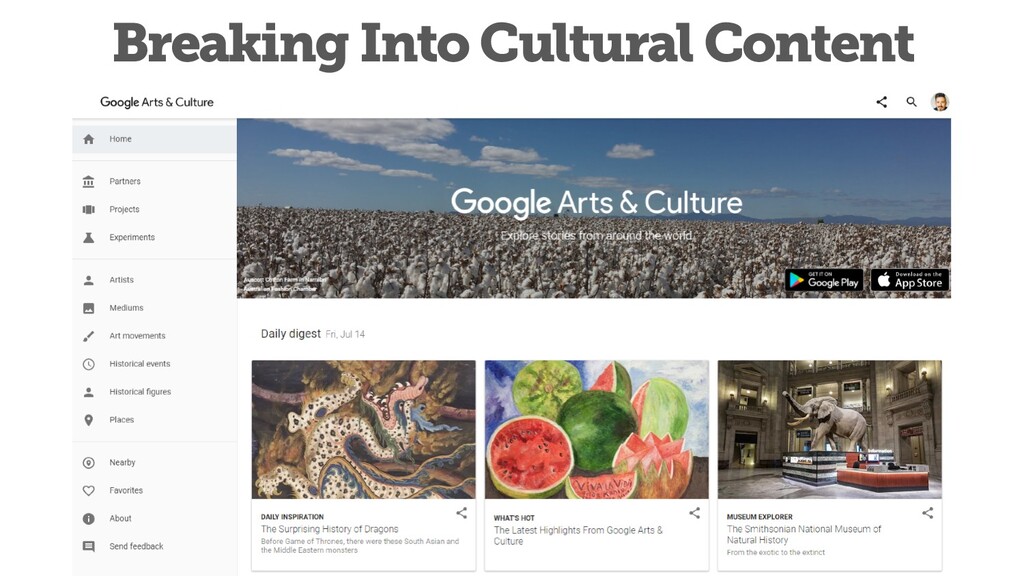
But first off, let's, let's chat about where they are kind of across the industry. So they've been breaking into a lot of new fields. You probably saw job listings and reservations. You may not have seen that Google is breaking into cultural content, which I thought was pretty fascinating, disintermediating some folks here, and putting up really some quite impressive content through their arts project.
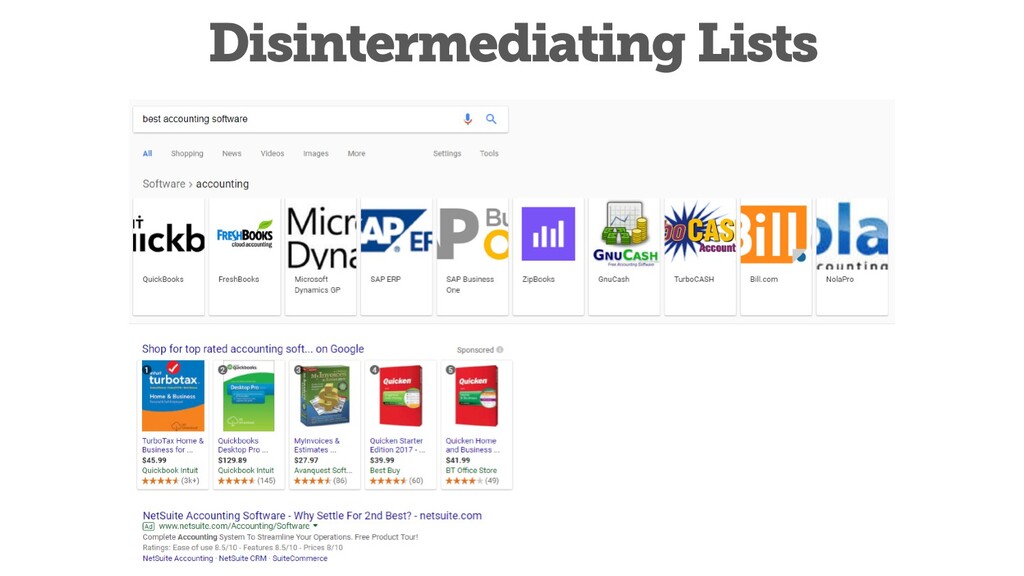
They've also been disintermediating some folks specifically in different types of content. So take a look here, best accounting software. Right? That comes from the first organic listing. Right? This QuickBooks, FreshBooks, Microsoft Dynamics GP. But Google is basically scraping it and then showing it to you without you having to click.
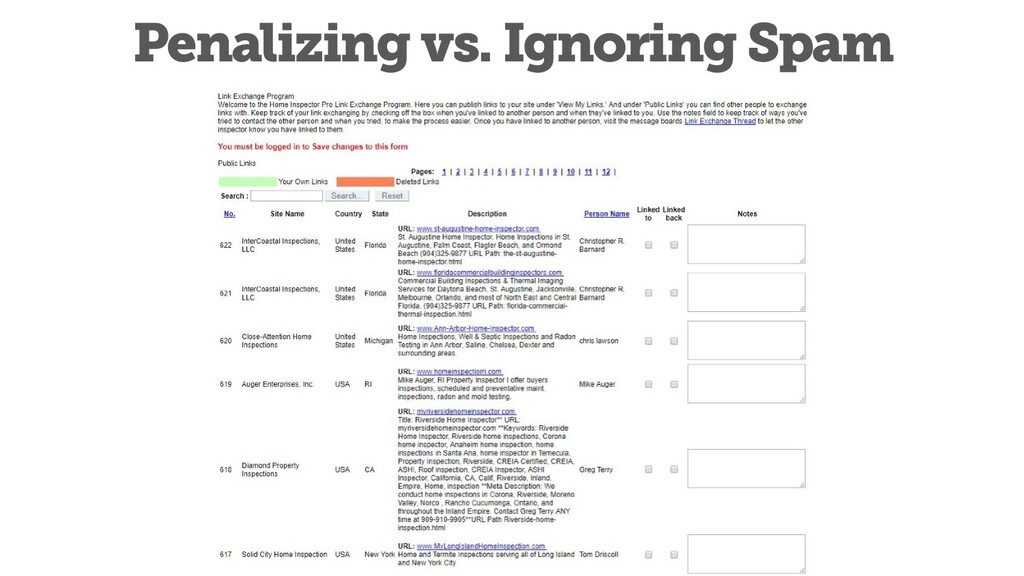
They've also been changing up how they treat web spam a little bit, link spam in particular. They've shifted a little bit in, rather than penalizing a lot of spam, they've been ignoring a lot, which which does mean that a lot of spammers have taken advantage of that fact and are now pushing a ton of spam again, which we hadn't seen as much of, after Penguin.
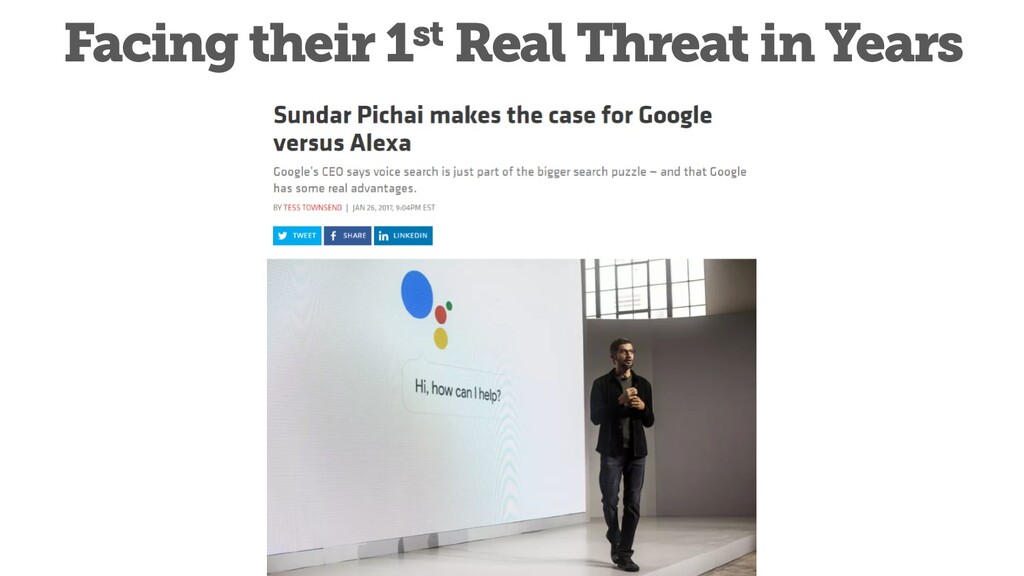
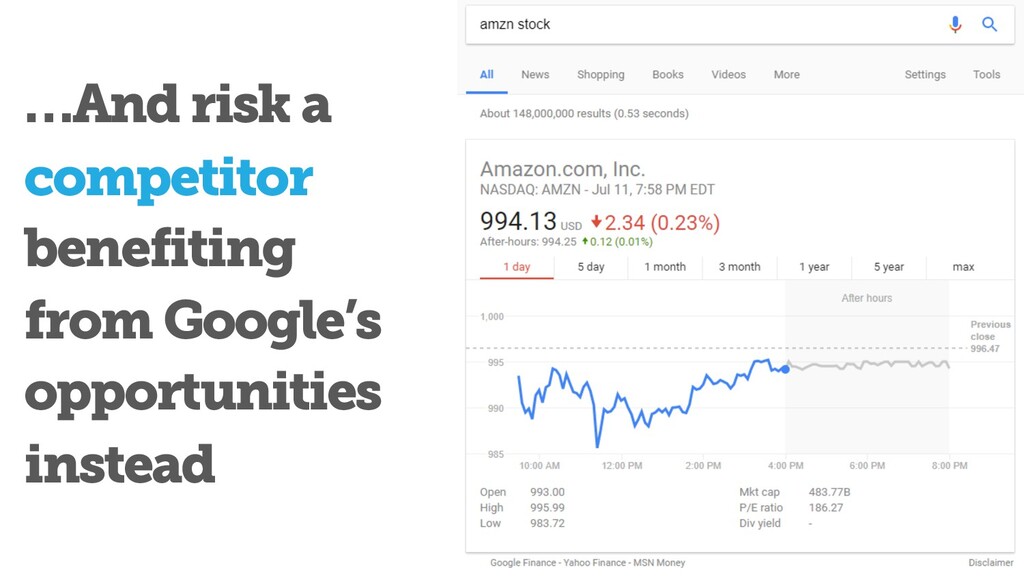
And I think Google's actually also facing their first big threat in a few years with Alexa. I think that when Google looks across the landscape and said, who could potentially take share away from us? Amazon's Alexa is the biggest threat on their radar, and as such, you're seeing a ton of investment in voice.
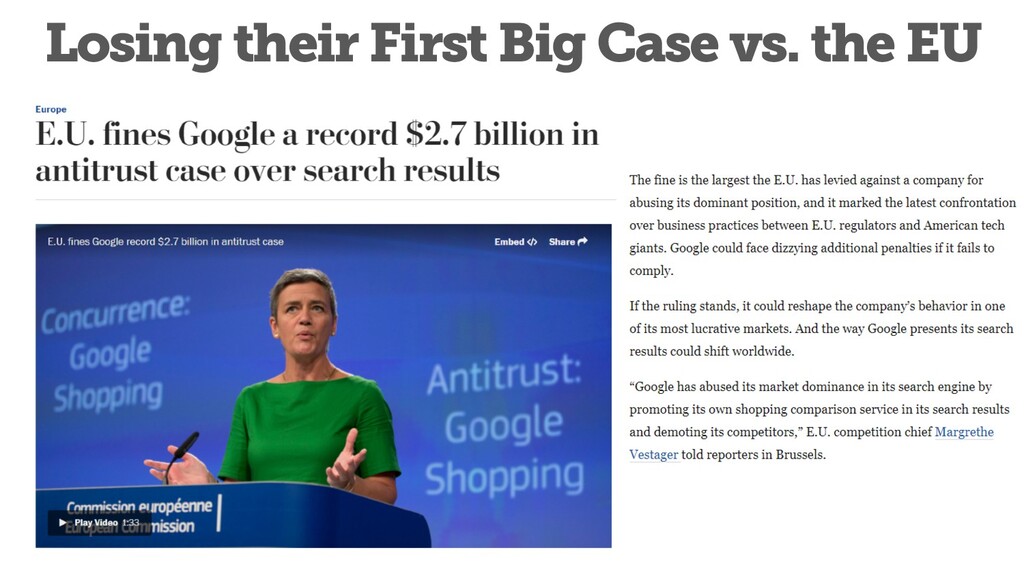
They also, thanks to the EU, which Scotland is maybe something yeah, you'll tell me at the bar later what your relationship with the EU is. But the EU actually did penalize Google in this case. They lost a lot here, and their share price went up because investors were expecting that the fine would be even bigger than two point seven billion, which that's just Google has so much money.
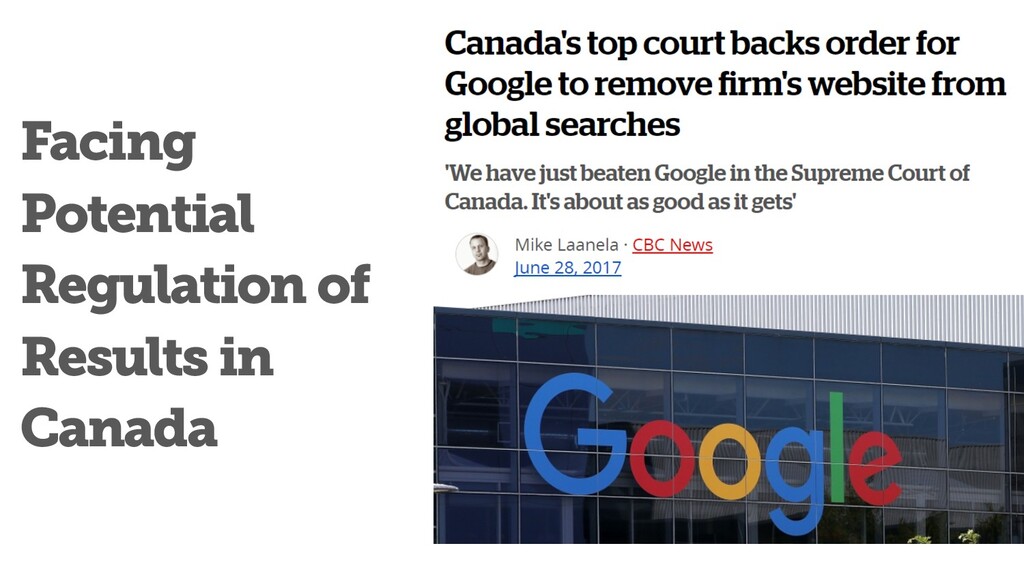
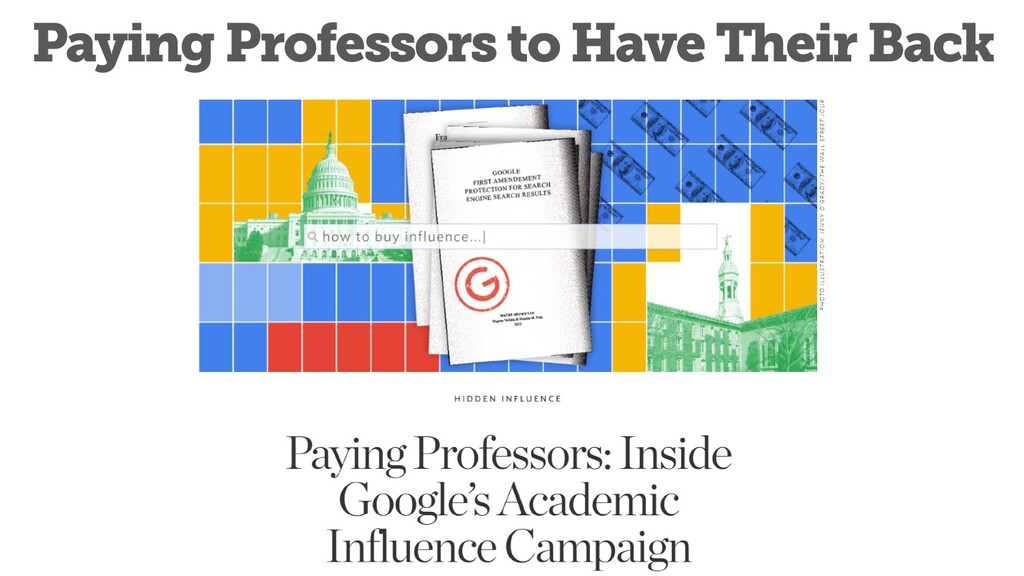
They're also facing some regulation in Canada, and in the United States, they are making sure that they don't face any regulation by paying university professors. I'm not sure if you saw this amazing story, this was in courts, but paying professors to produce research saying that Google is not violating antitrust law, and then having those professors lobby on their behalf.
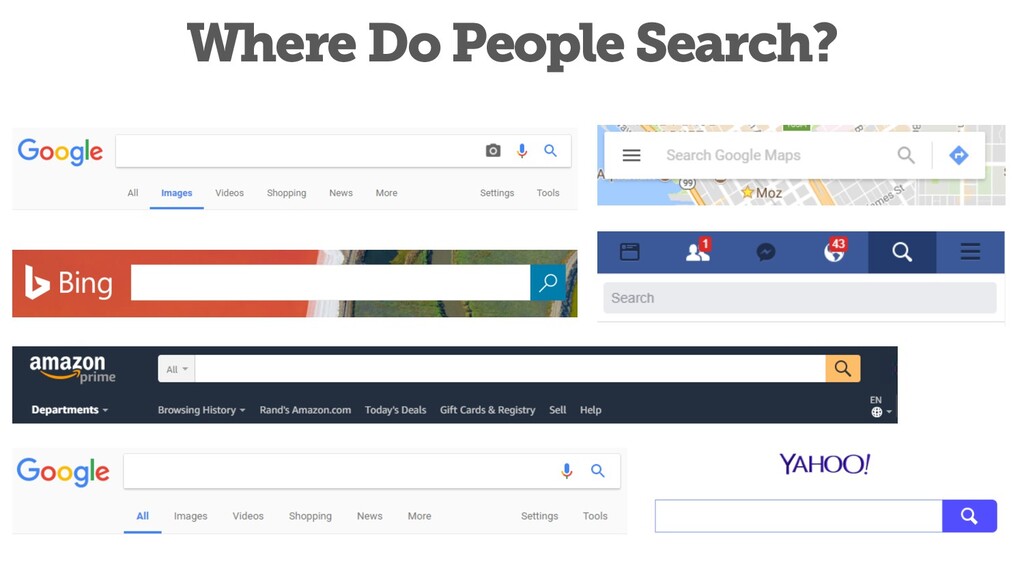
My God, America is the land of the money. But Google is still the behemoth. So we we looked at some data that we pulled together with Jumpshot. Jumpshot gets clickstream data from, the United States as well as the UK and Canada via, devices so they can see where browser visits happen on the devices that they track.
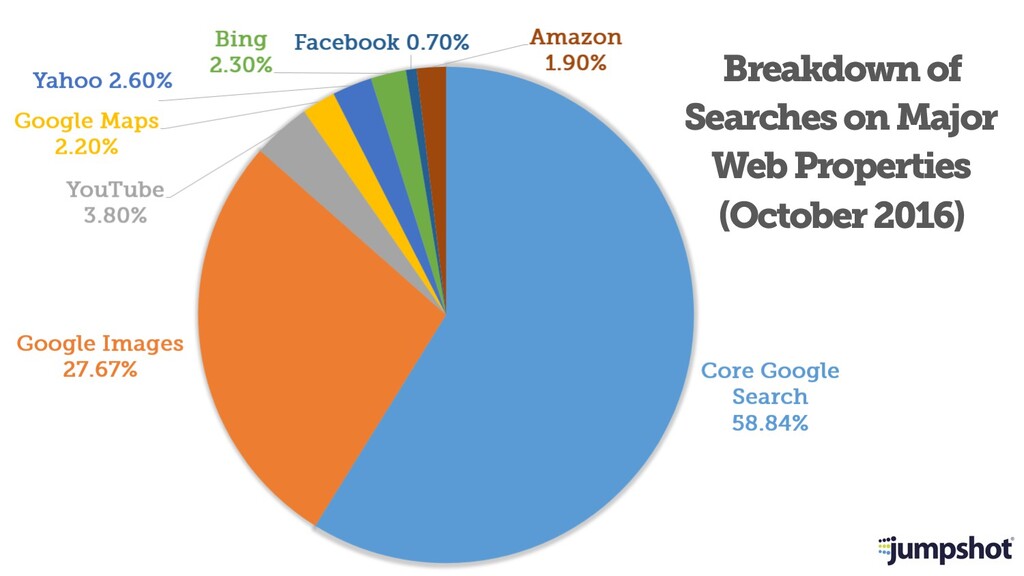
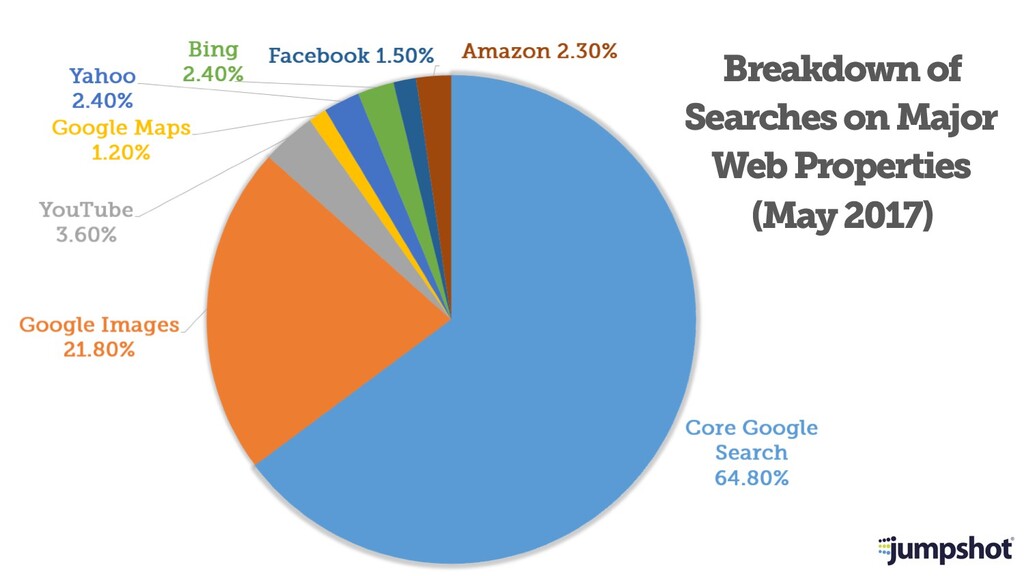
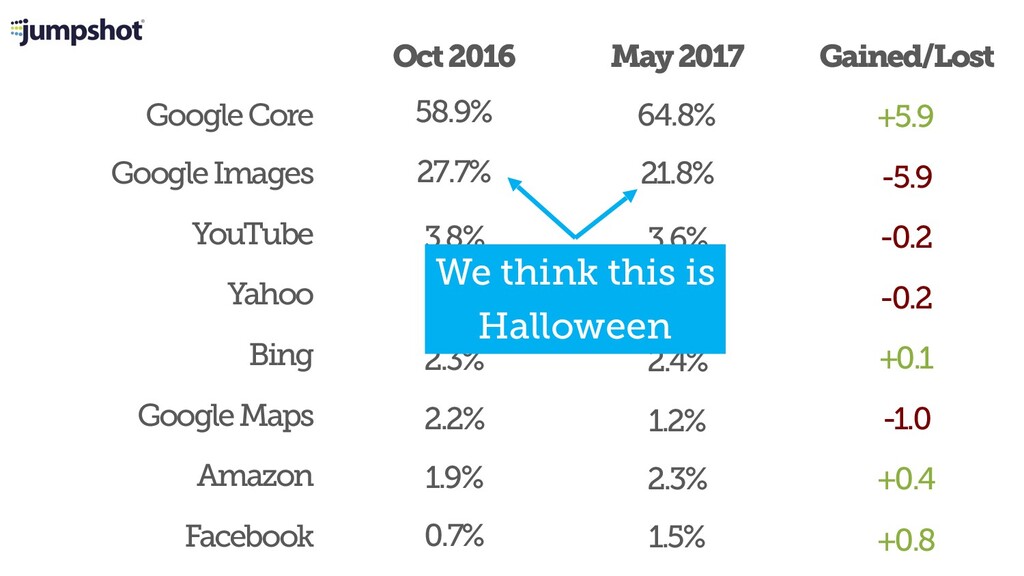
And they do have millions of devices, in the US and and other places. So we we wanted to ask, what's going on? Where is where is search happening? And take a look at that. So this is October of last year, and I'm going to show you May of this year.
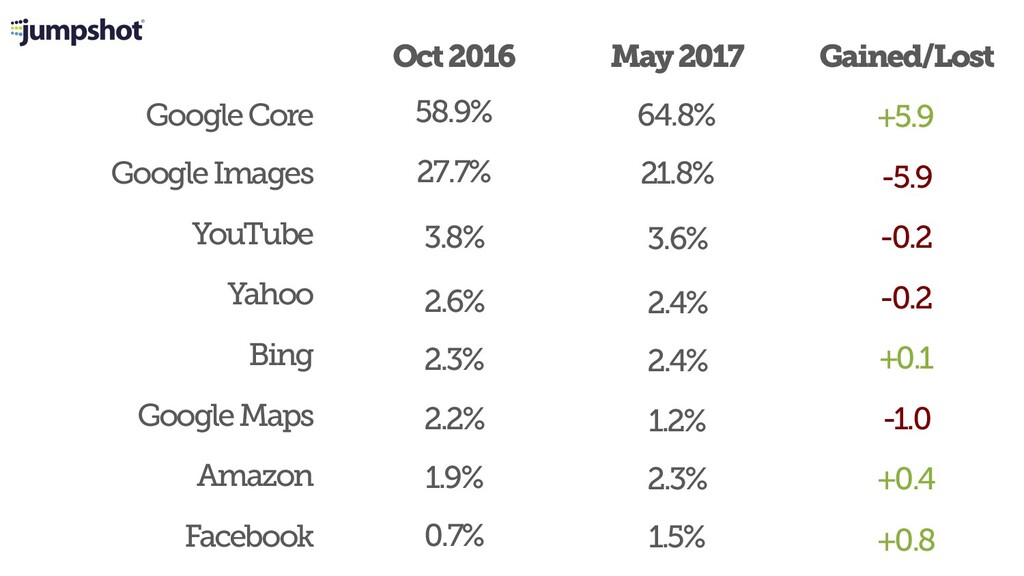
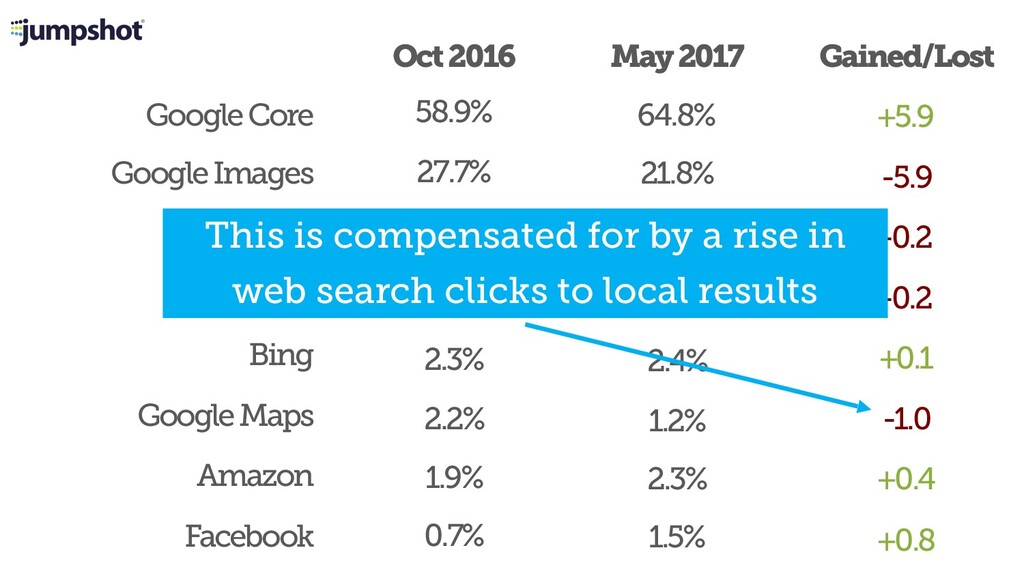
So here's October. There's May. Google is dominating, dominating, just completely crushing it. And for those of you who are going, not a pie chart, fine here. You can see so Google Images, October twenty sixteen, anyone show shout out a guess of what you think was happening in October that made Image Search even bigger than it normally is?
What do what do Americans do in October? Halloween. That's right. We think that's Halloween. We looked at the prior year, and we saw a spike in October. Lots of people searching for costumes. But that's crazy. Right? Like, can you believe that twenty percent of search is happening on Google images?
It's insane. And we double we we like triple checked this. I I was like to the jump shot folks. I'm like, Randy, Sean, I don't know about this. This looks sketchy to me. They're like, nope. Here here's the data. Here's here's what people are doing.
And sure enough, people perform hundreds of searches. I think most of it is when you go to the bar with your friends, and you're like, oh, I think he looks a little like you and MacGregor. No. No. Maybe this one, this one. And every time you click, it's a new image search, right?
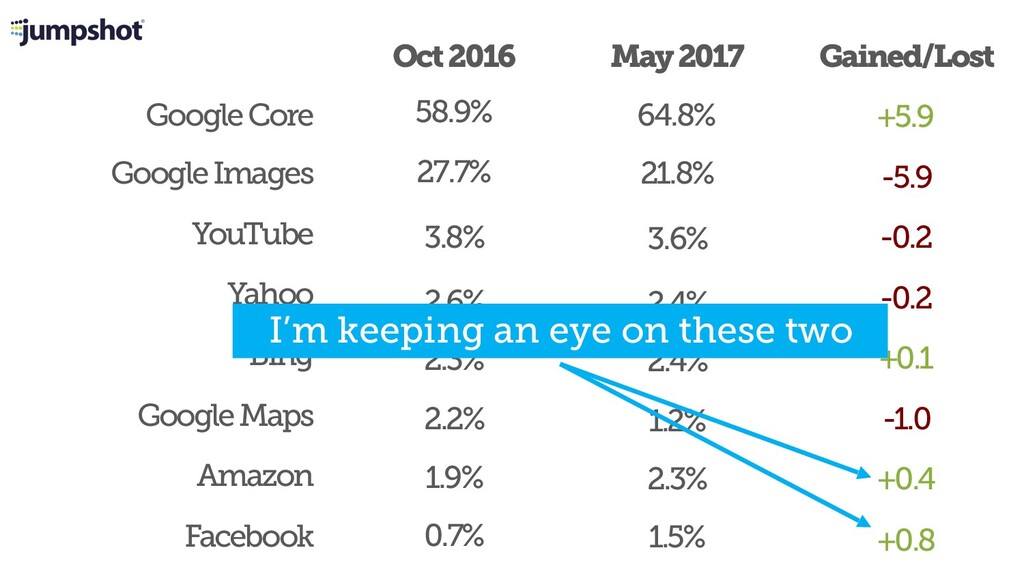
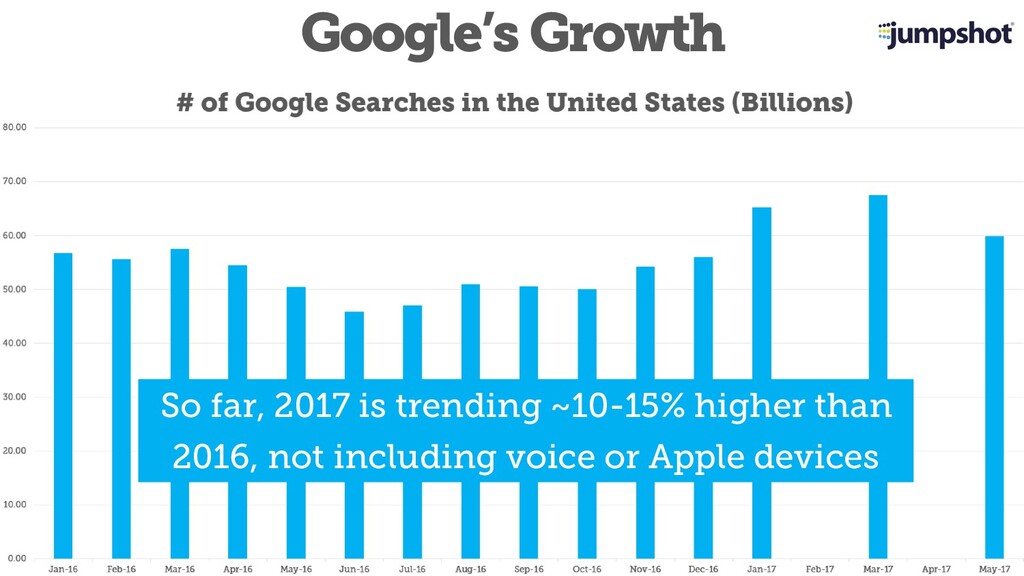
I'm keeping an eye on these, because Amazon and Facebook growing their search share is an interesting one. They're still tiny, like fractional tiny, but pretty interesting to see. Google growth so far, at least in the US, twenty seventeen is trending about ten percent to fifteen percent higher than twenty sixteen.
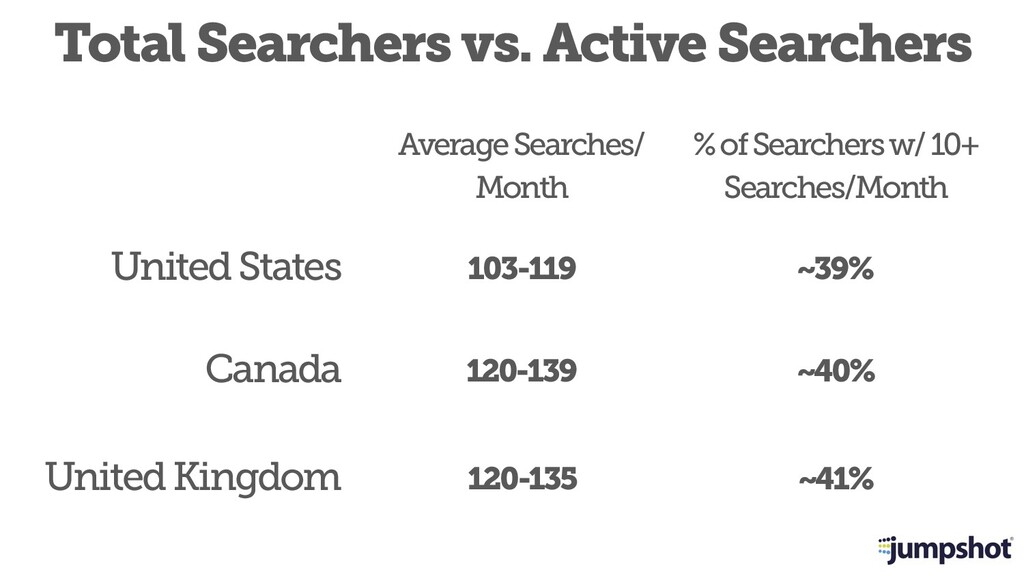
One thing to note, JumpShots data does not right now include Apple devices. They don't have enough coverage of Apple devices to, give us iOS stats. So this is Android on mobile and then, mostly Windows PCs, but fairly good coverage regardless. You can see that the UK actually has slightly more active searchers than the US and Canada do.
So about forty one percent of all searchers here in the UK perform ten or more searches per month. I'm just trying to imagine who in the world can do less than ten searches in a month. I don't think I can go two hours without ten searches, even when I'm sleeping.
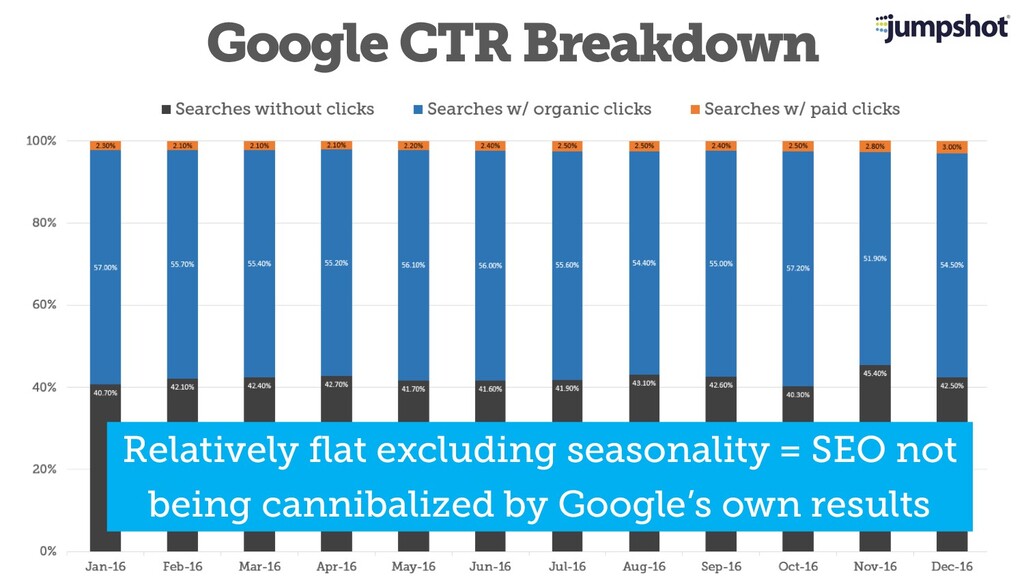
Like, that's just weird to me. Who are those people? In terms of click through rate so you might be thinking to yourself, remember we were talking earlier, up here when Will and I and Lisa were up about, like, hey, what's going on in terms of, paid search versus organic search?
And in that case, what we're seeing here is a little bit like, yeah, you know what? The changes we've seen are not that significant. So that orange, those orange bars up there, that is paid clicks. The gray bars are no clicks, zero clicks, right?
A search that's performed and basically Google is answering that query for us. The browser doesn't click any further. And then the fifty percent, that blue, that is organic clicks. So organic still, you know, twenty, thirty times the size of paid, and not much variation.
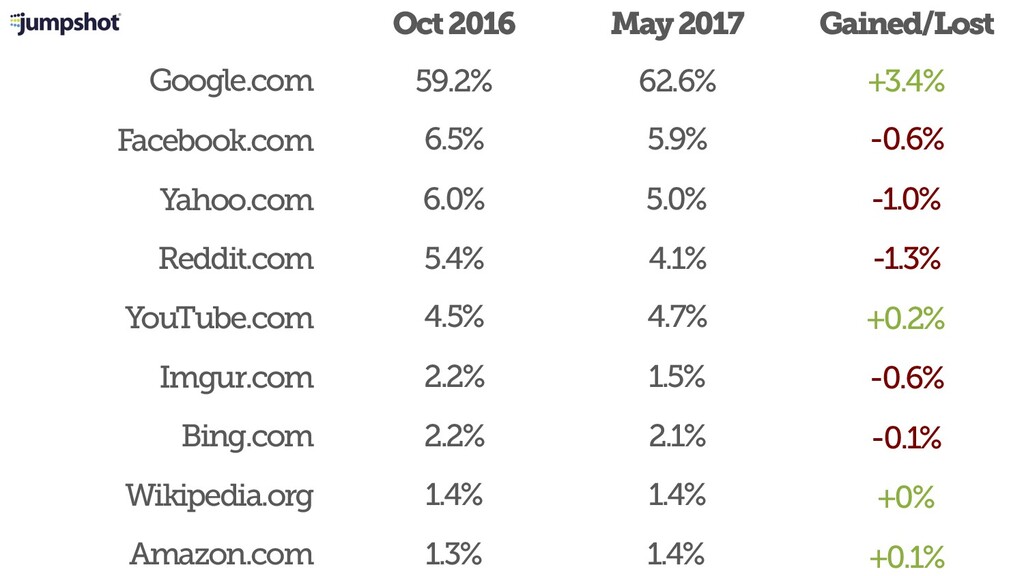
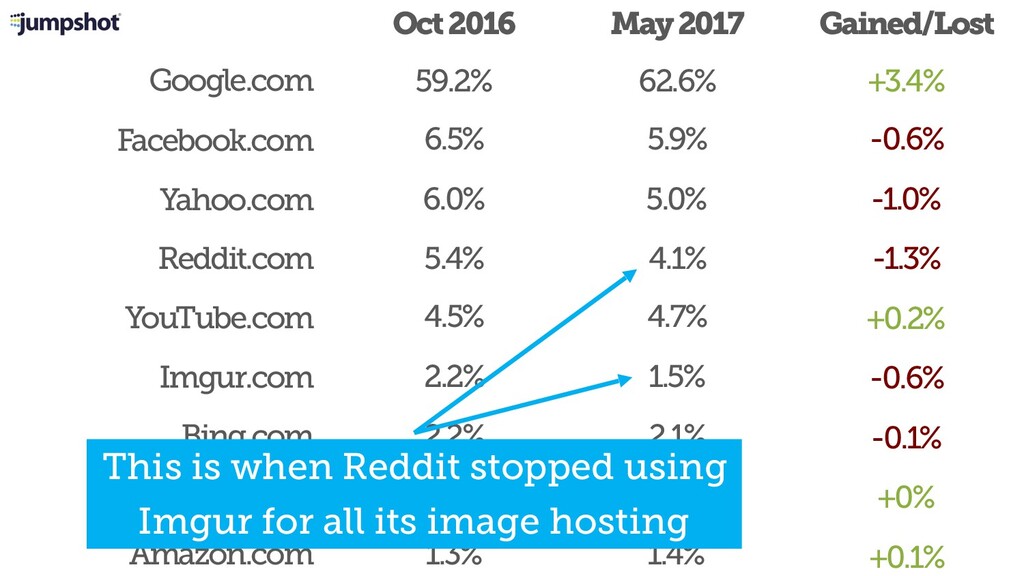
I mean, was fifty seven percent, you know, a year and a half ago. It's fifty four point five percent now. Like, not huge changes. In terms of referrers, so this is who's sending traffic to the web, right, to the rest of the websites.
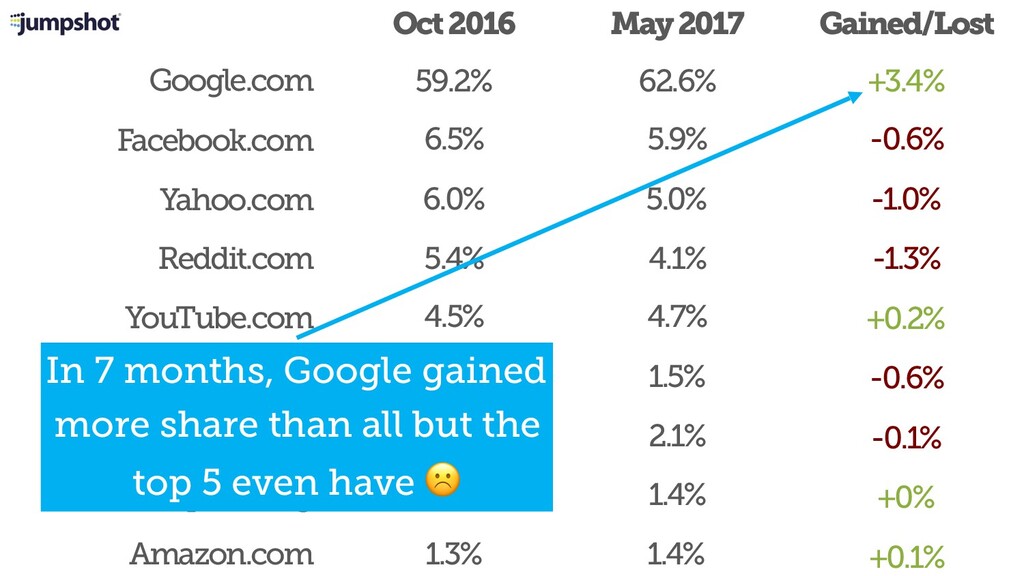
So Jumpshot basically looked at all the traffic that gets sent around, and here you go. So I mean, look at the top there. Like Google is completely dominant. Now Facebook is an interesting one. Facebook is sending a lot of traffic out, but just wait.
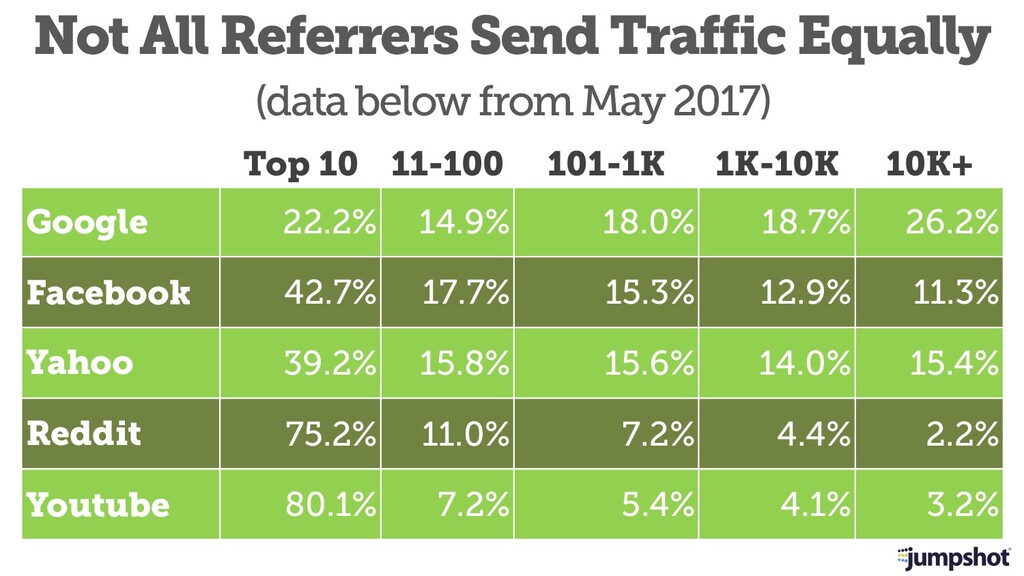
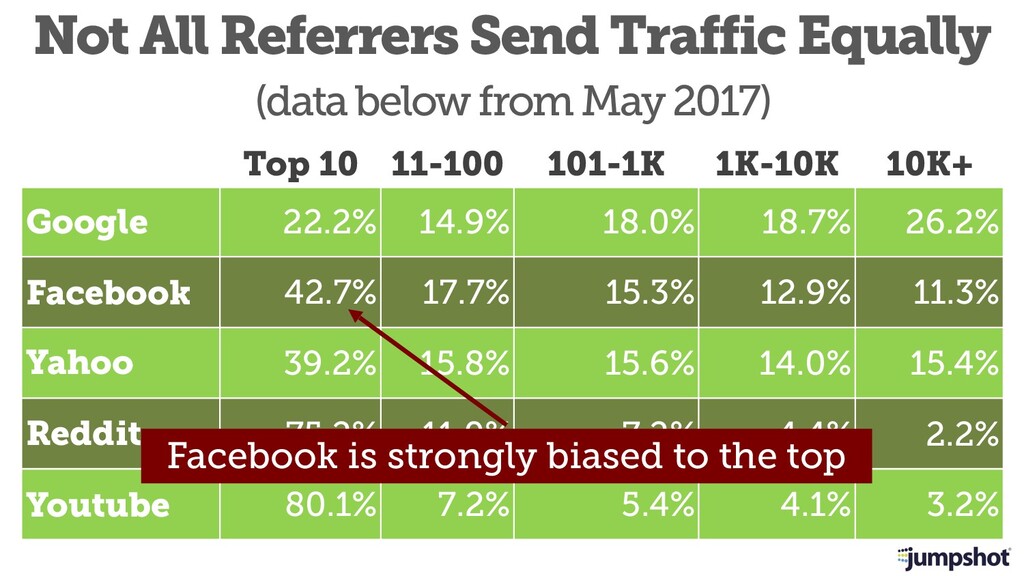
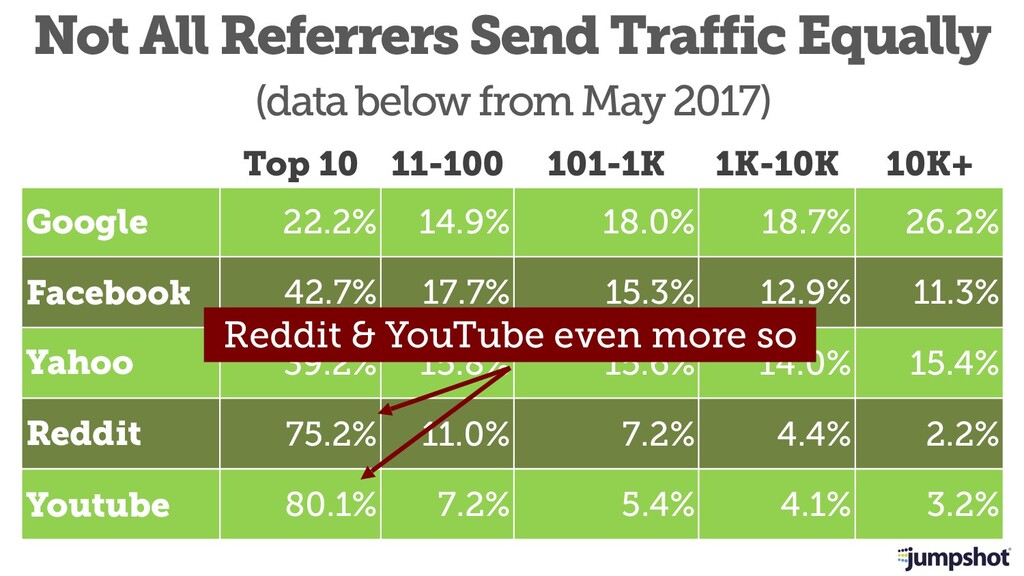
Because not everything is even. That that, by the way, we think is, Reddit. We're pretty sure, because we looked at when that change happened. Imdr changing. But check this out. So yeah, Google growing really fast. But here, this is a distribution of who gets the traffic.
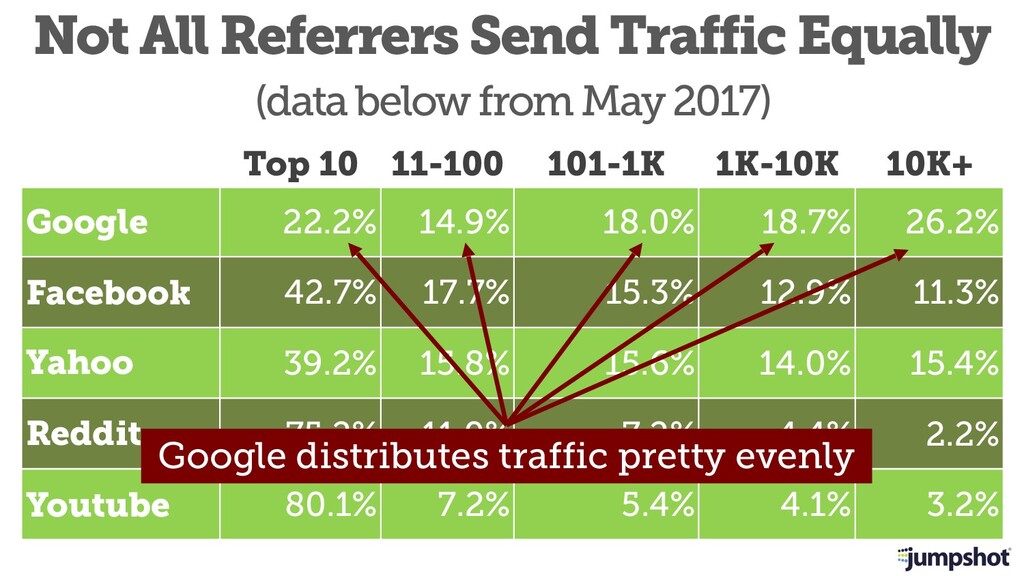
And Google sends a lot of traffic to the top ten, but not nearly what Facebook does. Not nearly what Yahoo does. Not nearly what Reddit or YouTube does. Like, if you are not in the top few hundred sites that are getting traffic from Facebook, you are out of it versus look at Google over there.
Ten thousand, you know, site that the the long tail of the people that Google sends traffic to still get a lot of traffic. Google distributes really evenly, but you know, these other guys really really biased to the top few. So we obviously are still living in a very Google centric, Google shaped world, and I think that's kinda dangerous.
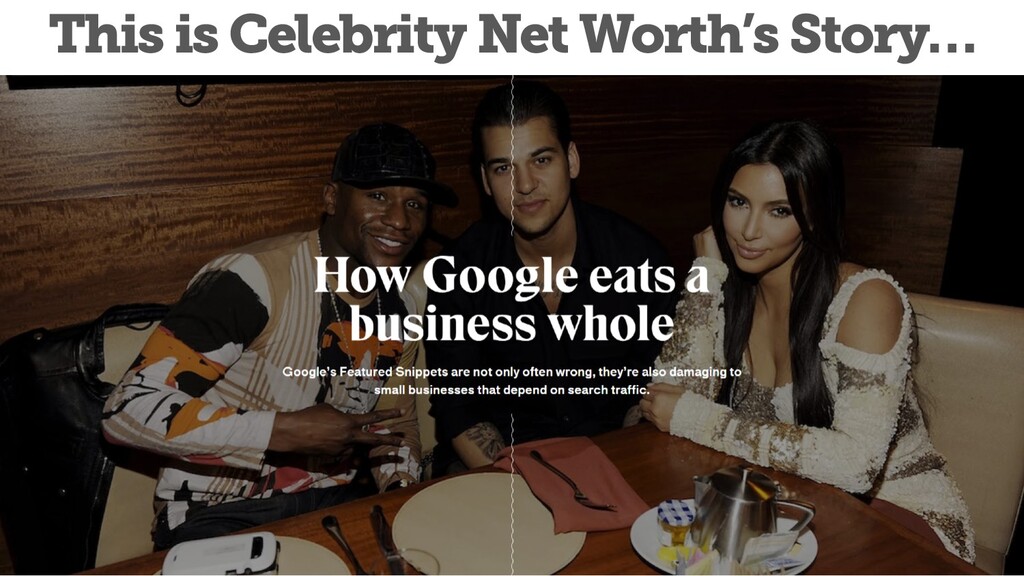
So I wanna tell you the story of celebrity net worth. So Dan, Dan and I can't remember his it's not Martell. Dan and his crew from Celebrity Net Worth, basically were fascinated by a boxer named Floyd Mayweather. Now Floyd apparently spends ridiculous money, like crazy money.
There's a seat next to Nicole here, honey. This is my wife, Geraldine, coming in and joining us. And and and so Dan and his crew, right, basically were like, hey, what can we do? What can we investigate about, what's going on with Floyd's net worth?
And they actually ended up building a business, a whole website around what celebrities are worth. And they do a bunch of investigation. They had a lawsuit against Larry David, where sorry, not a lawsuit. A threat of a lawsuit, because Larry David said, I'm not worth as much as you say I am.
And then it ended up that actually Larry David's accountants agreed with celebrity net worth about his net worth. So then the lawsuit was dropped. So they're good, right? Like they do a lot of investigation work. They get an email. Dan gets an email from a Google representative.
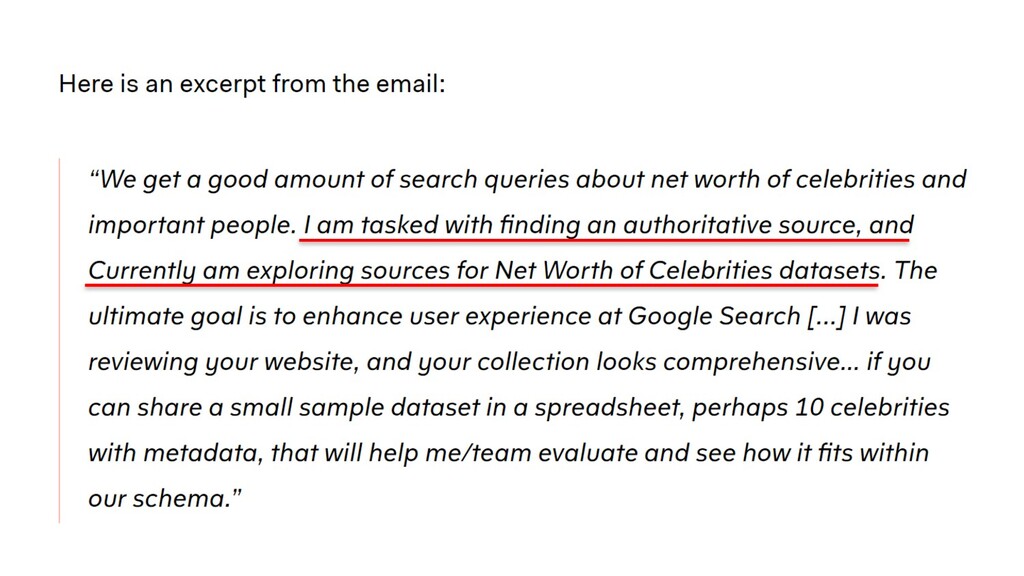
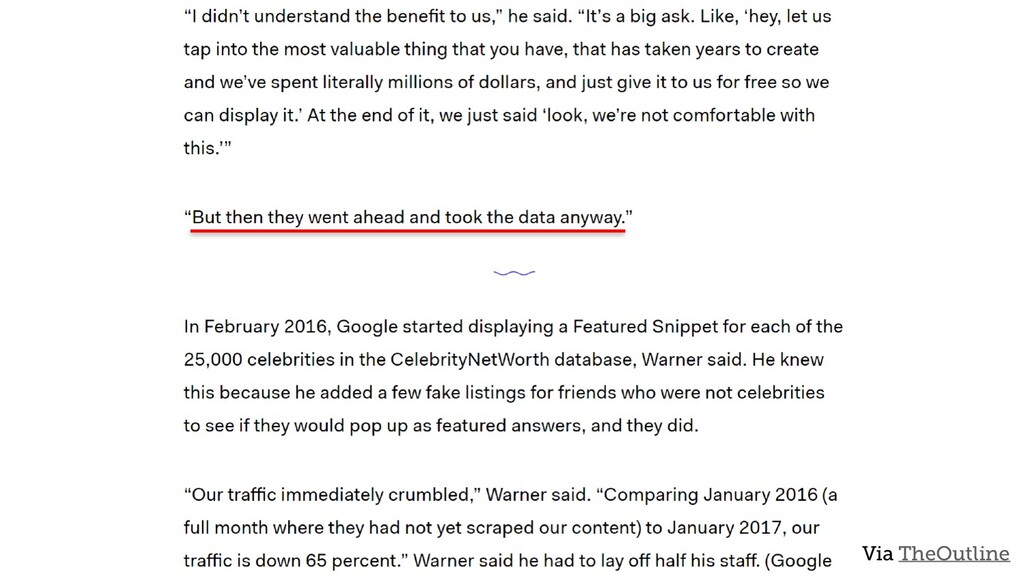
I am tasked with finding an authoritative source, and currently I'm exploring sources for net worth of celebrity data sets. And Dan's like, well, that's kind of interesting that Google wants to work with us and partner with us. Well, yeah, you know what? I don't see any benefit to it.
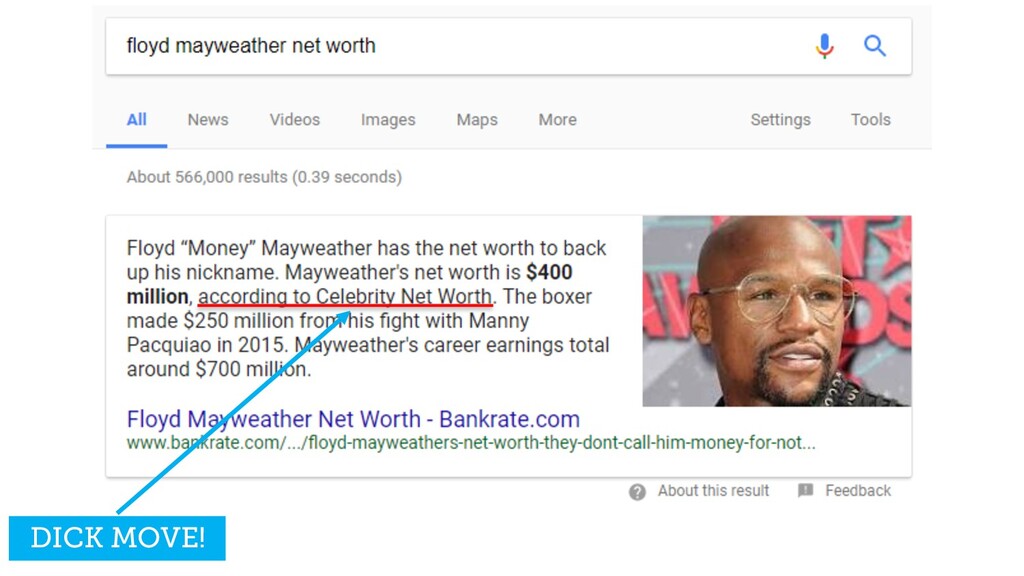
I'm not going to do it. And Google took it anyway. He said, no, we do not wanna work with you, but thanks for your interest. And Google started displaying a featured snippet for each of the twenty five thousand celebrities in the celebrity net worth database.
How did they know? Because he put some of his friends' names in there who are not celebrities with fake net worth numbers, and then he googled them and saw that Google had directly stolen their markup and put it in their featured snippet. It was like, oh, you're not gonna work with me?
Well, I'm the ten thousand pound gorilla, so what you gonna do about it? Nothing. That's right. Nothing. And it dropped their traffic, tanked them. Google basically once Celebrity Net Worth, by the way, spoke to Quartz about this, Google dropped all the featured snippets that they had and they just started referring to people who referred to them.
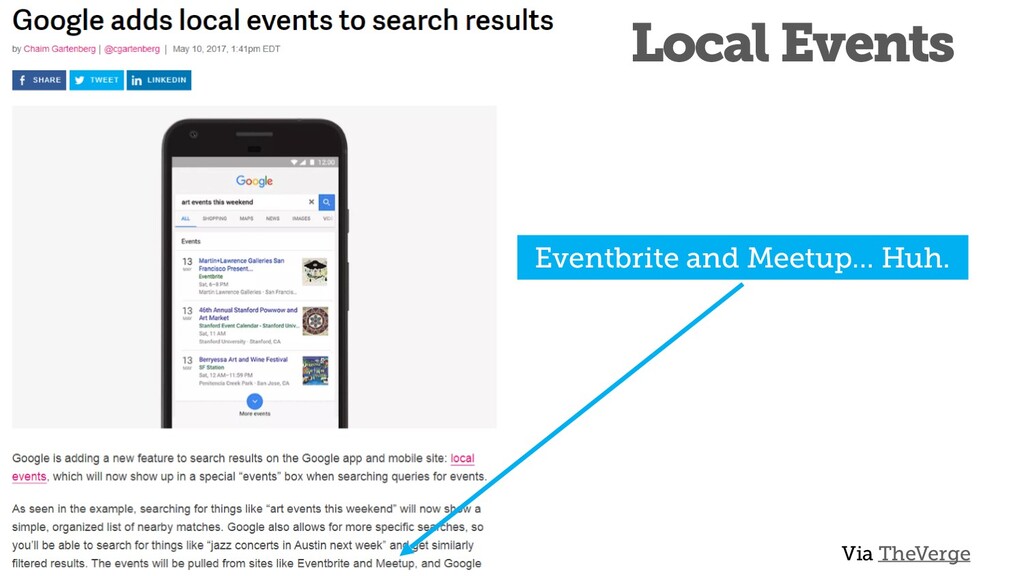
So like even worse, just cold, ice cold. This is Google Trojan horsing in the same way they did with Celebrity Net Worth, local events. Right? Let me let me just take that data from Eventbrite and Meetup. Oh, yeah, sure, we'll work with you, and then we won't send you any traffic.
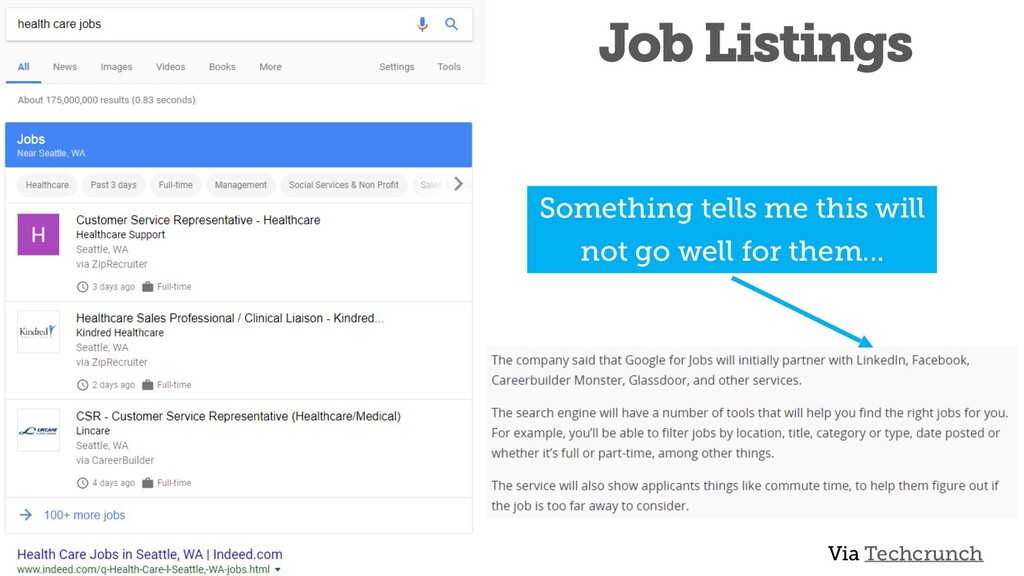
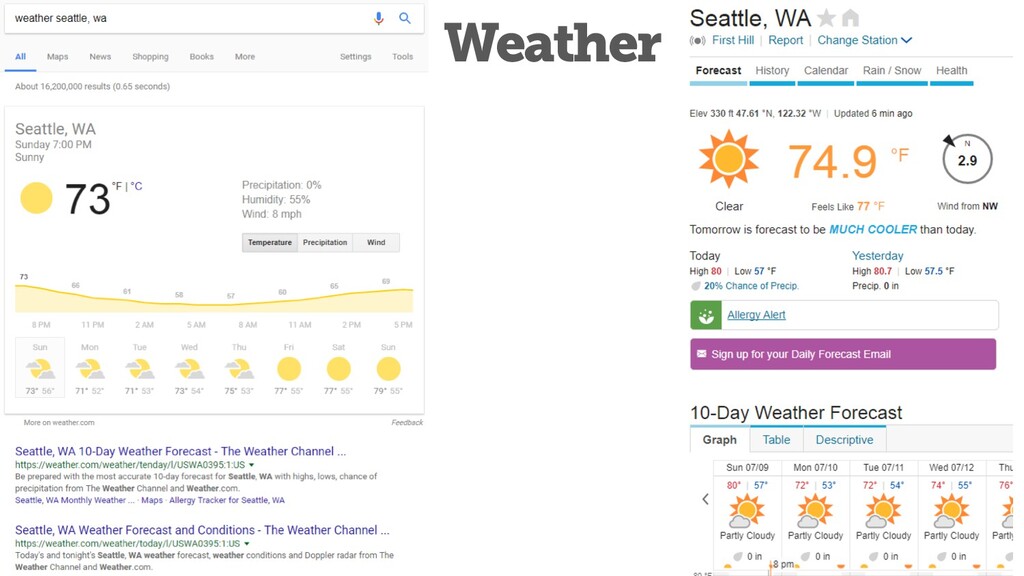
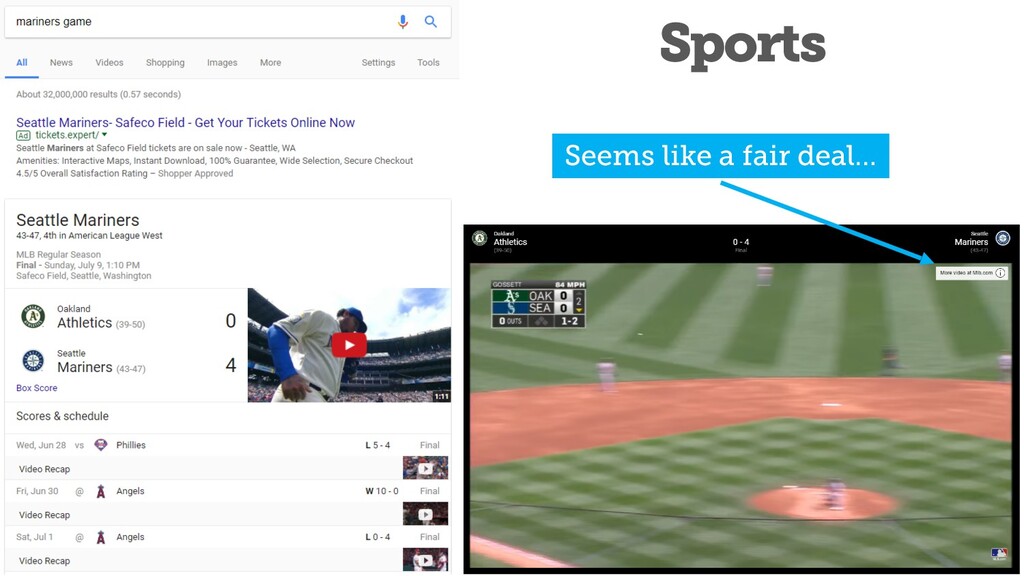
And job listings, right, we're paired up with LinkedIn and Facebook and CareerBuilder and Monster and Glassdoor, except now we own it. And here we'll work with weather providers, except now we're just gonna take it direct. And here we're gonna work with Major League Baseball, except oh no, wait, we're just gonna take your videos and make them our YouTube videos and not refer the traffic to you anymore, and give you that.
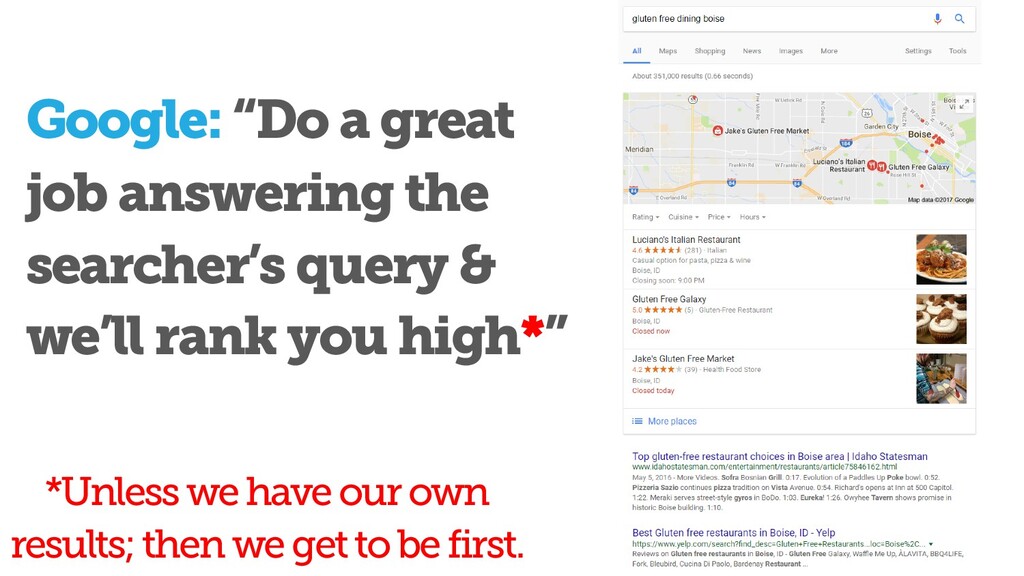
That tiny little gray thing that says more video at mlb dot com. That's what Major League Baseball gave up when they made this deal. I think, I mean, this is cold. And this is a consistent model. Right? Google's basically like, hey, you do a great job answering the searcher's query, and we will rank you well.
Oh, unless, we have our own data, and then then we get to be first because we're Google. This is what the EU sued them for. Right? The EU was like, no, you can't just put yourself first all the time. But Google, through lobbying in the United States, aka legalized bribery bribery, which our political system runs on, has avoided that fate, you know, in America.
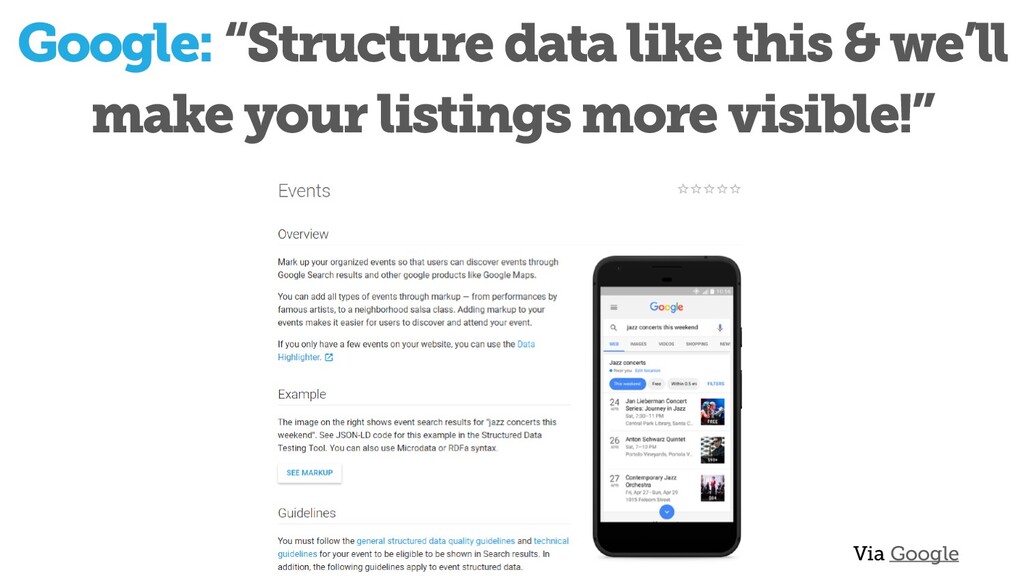
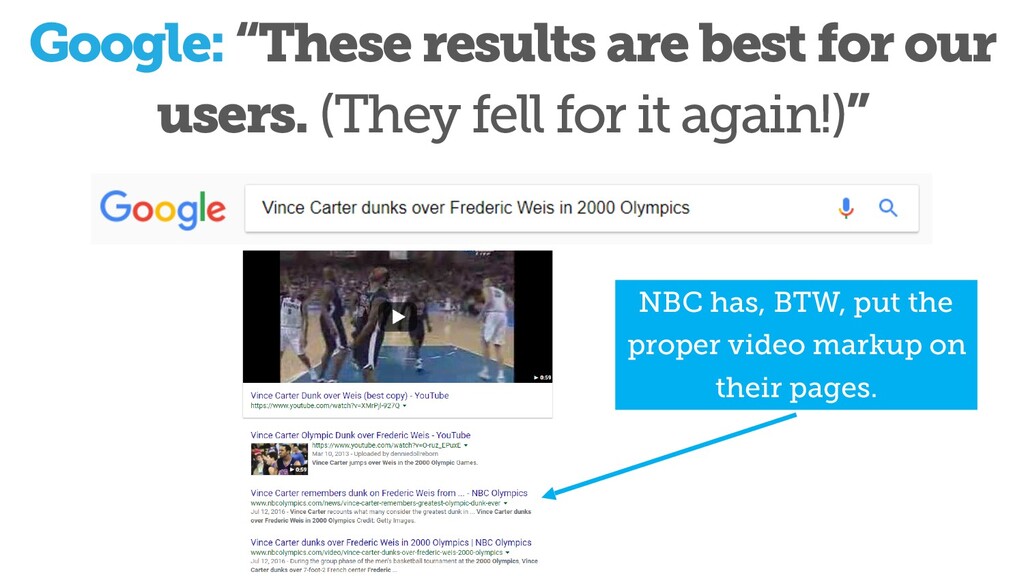
So they're sort of like, hey, why don't you structure your data like this? We'll make your listings more visible until we take them from you. And oh, yeah, these results are actually best for our users, so that's what we want to show people.
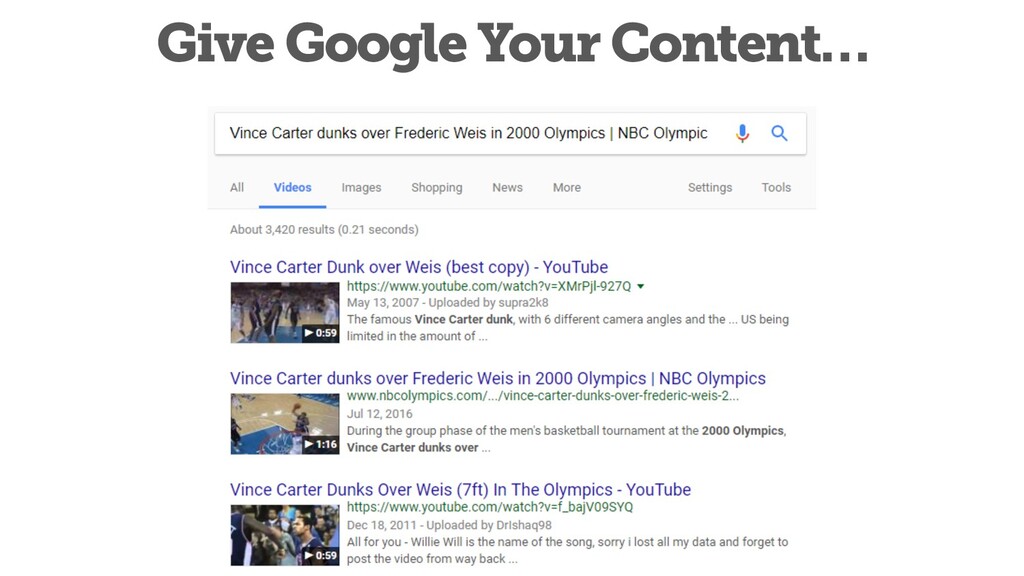
Oh, but then, no, actually, we what we are gonna show people is our stuff instead. In this case, I mean, what's cold is NBC made all this markup. They put all this investment into their video. They dredged up all their Olympic video from decades past, and they put it online with the schema video snippet schema format that Google said they had to use, and then Google was like, actually, we're gonna take this person who just pirated a minute of that from and put it on YouTube,
and we're gonna rank them, And, you're on page three of the video results instead, NBC. Sorry. So I think it's kind of a prisoner's dilemma, right? Like either you give Google your content, and in which case, you know, they get to rank for it.
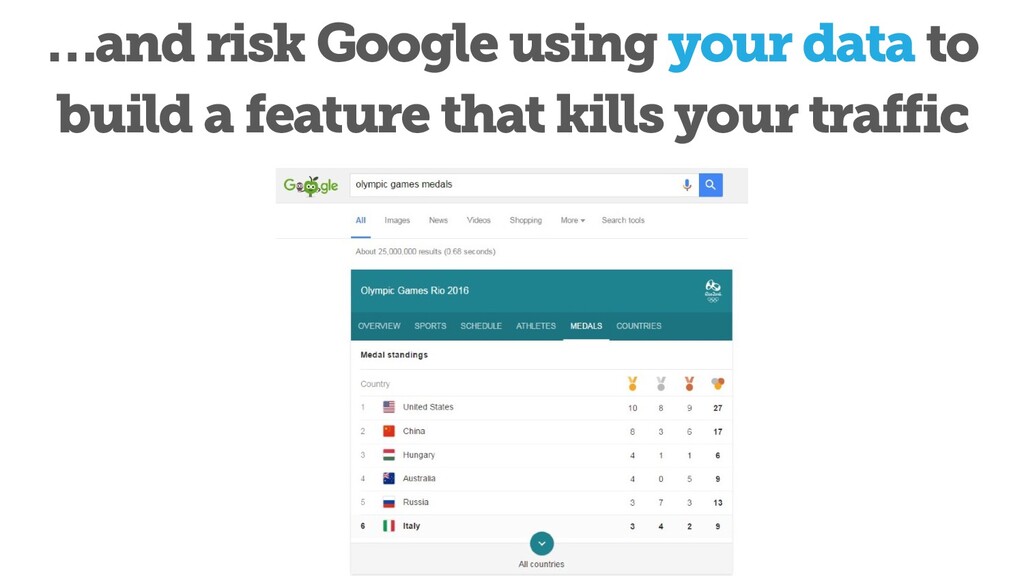
And then you risk Google using your data to build something that takes you out of the results entirely, that disintermediates you, as they did with the Olympic featured snippet markup here, right, which they got through their relationship with the Olympic Committee and rounding NBC and all the other providers.
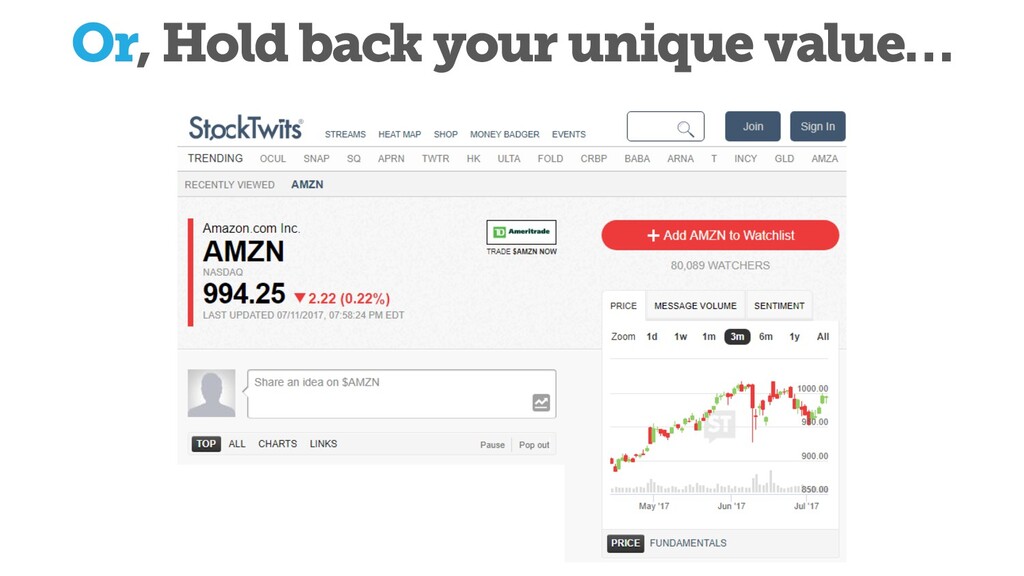
Or you hold back your unique value, like Stocktwits did when they said, no, we don't want to work with you, Google. We'd prefer to keep this on our own. And Google went, okay, we'll work with Yahoo and Bing instead, and we'll give them that.
Right? Sorry, Bing. MSN money. This this is what you get. Oh, well, I guess that's better than nothing. I don't actually know if that's better than nothing. Maybe? Maybe? I don't know. And this isn't the only thing I don't think it's just fear, right, that's keeping publishers away from wanting to work work with Google in this way.
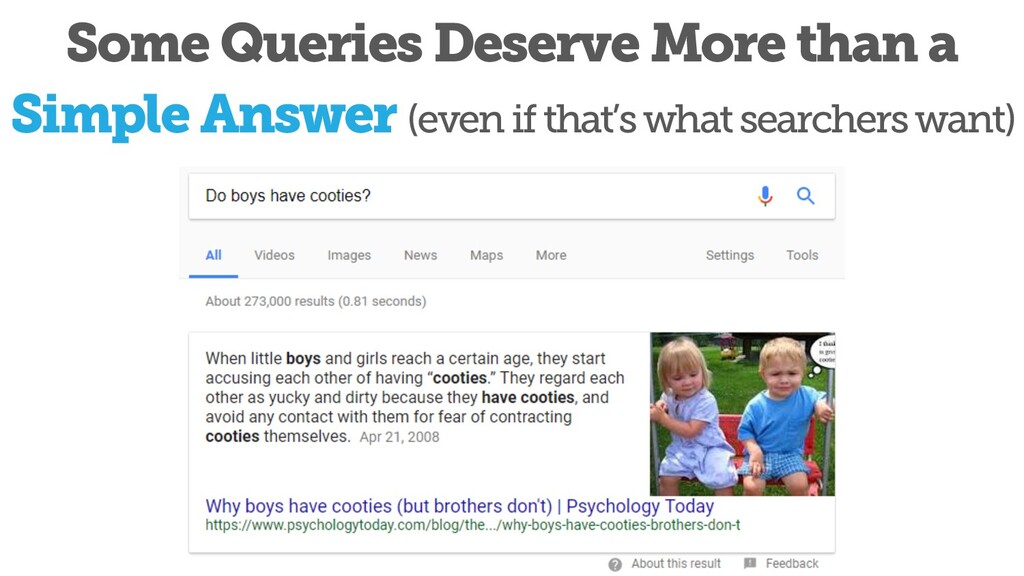
I I think a lot of times, queries deserve a a more substantive answer than what's being provided. Like, don't know, Google. This is the worst search result you could possibly give to seven year olds who came home from the playground and searched for, do boys have cooties?
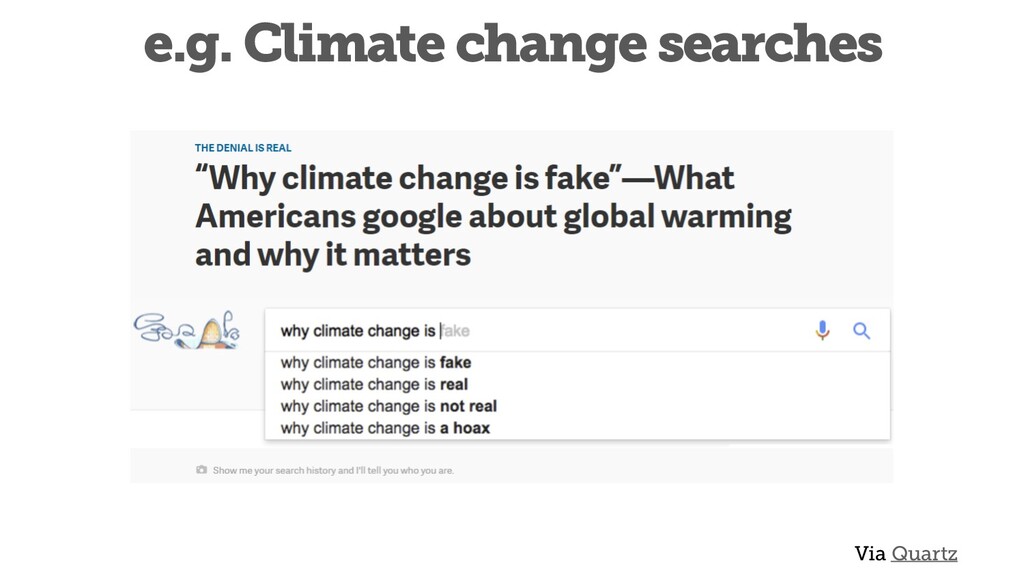
What? No. You don't featured snippet that. That's not the answer. Climate change. Right? If you're wondering why it is that, you know, ninety five percent of the world's citizens believe that climate change is real, but then there's like forty percent of the American population that doesn't.
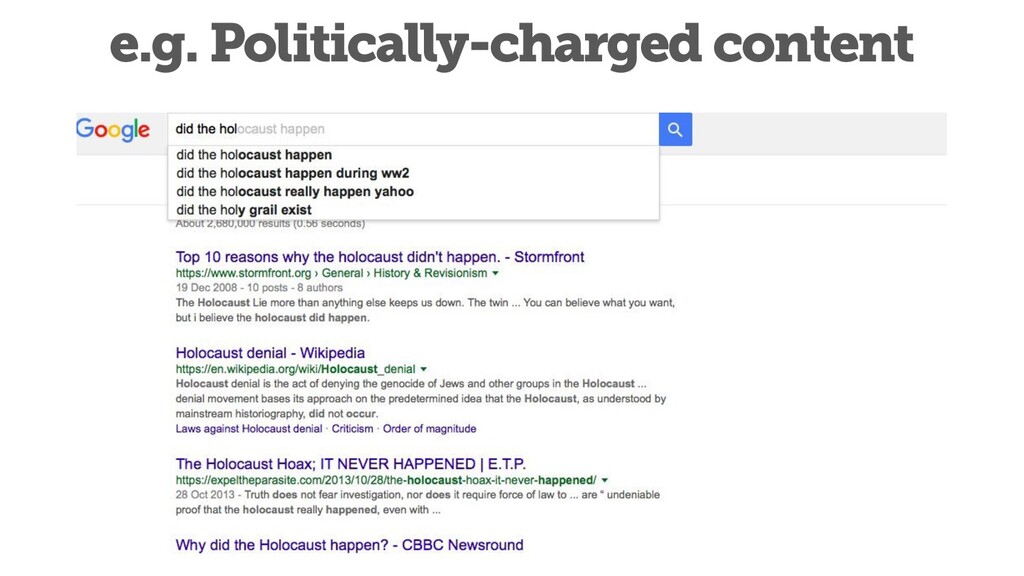
Well, this might be part of the problem. Right? Google is telling them it's fake. It's a hoax perpetrated by the Chinese, and it's insane. Politically charged content like this one, I I guarantee you, I only have, one great grandparent who made it out of Europe.
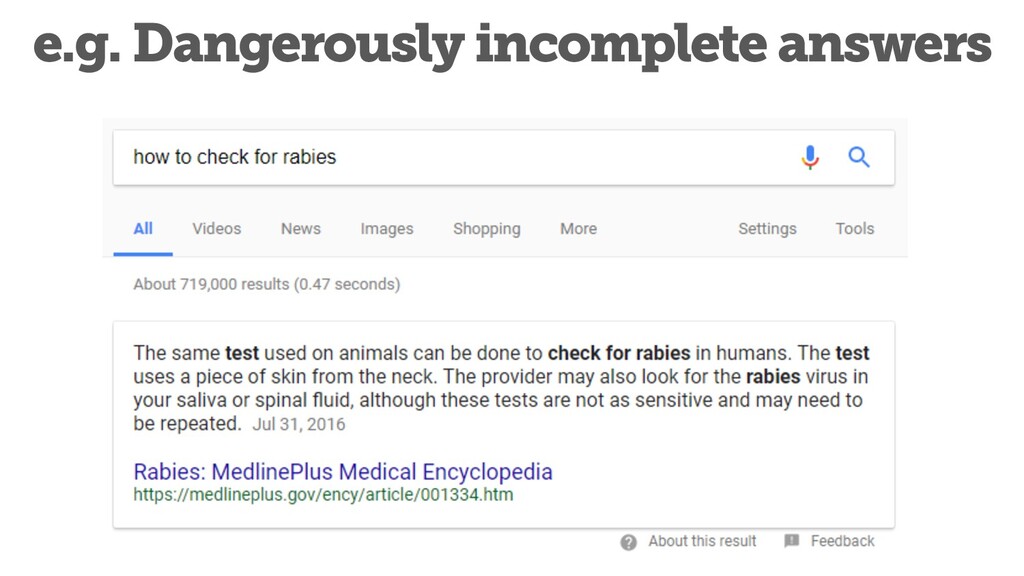
So I know for a fact that the Holocaust happened, and Google is like, no, no, it's storm front. Here, we'll we'll help you with that. Dangerously incomplete answers, how to check for rabies. I don't know if any of you are familiar with how rabies works.
Once you are able to detect rabies, like whether someone actually has it, they're dead. There's no way to save them. And so you have to go into the hospital and get like or to your doctor's office and get these painful shots in your spine, and a series of them in order to like prevent rabies from spreading, even if you think you or your child has been exposed to it.
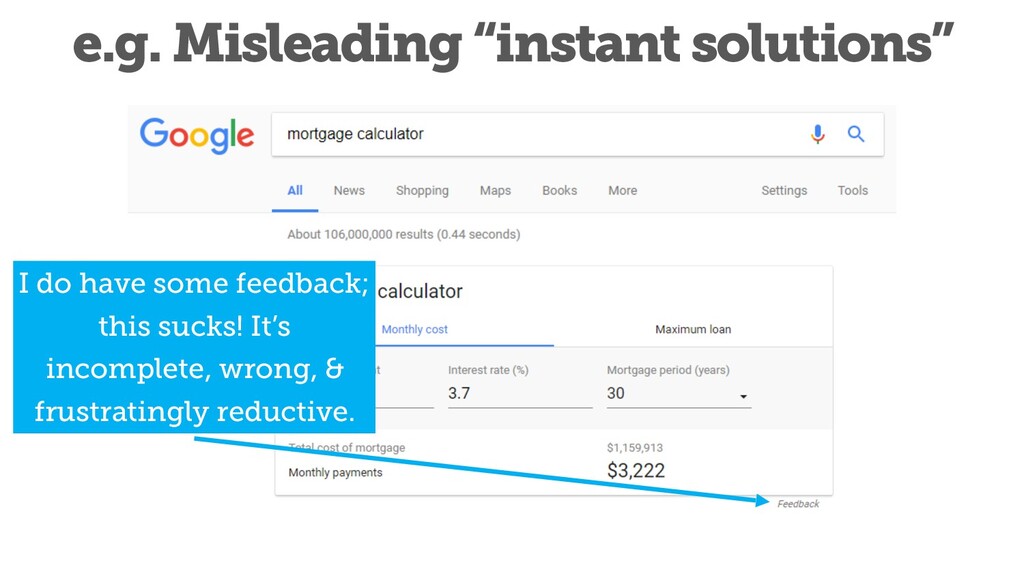
And in this case, right, Google is giving you a result that's like, oh, yeah, you know, you'll be fine. You'll be all right. That's that's really irresponsible. Another irresponsible one, slightly lighter on the scale but still very frustrating, is Google's disintermediation of mortgage calculators.
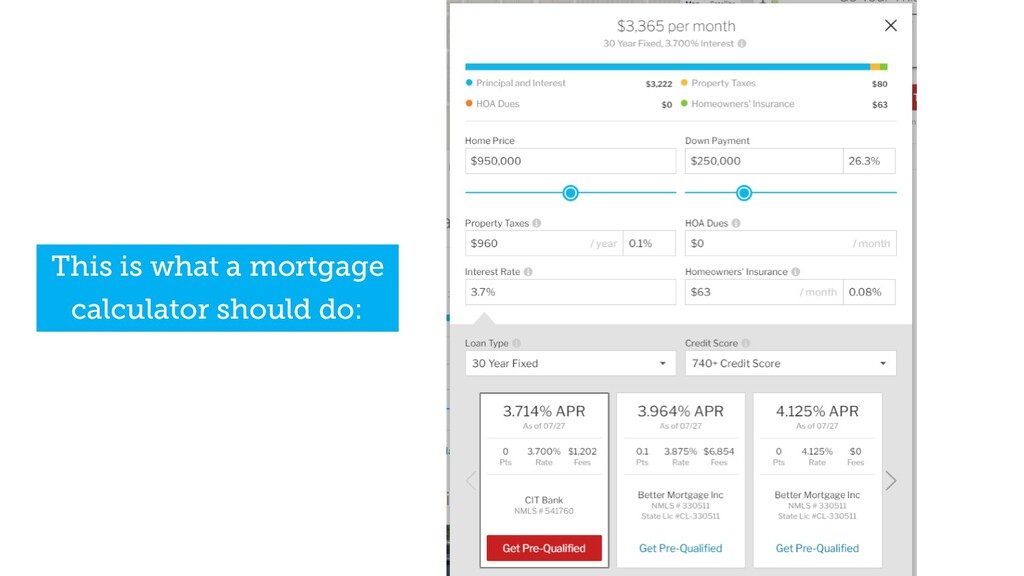
This is a crap result. I know it's a crap result because if you look by the way, I do have feedback from them. Like, this this awful. Here's what a real mortgage calculator looks like. This is this one's from Redfin. This is what it should look like. Right?
There's a lot more information that you have to put in there to know what your home payment will really look like. And and Google is just providing you this this simp overly simplistic one that is highly inaccurate, that is misleading, that will tell you your home will be you know, will will cost you one amount when it won't really I I I hate that.
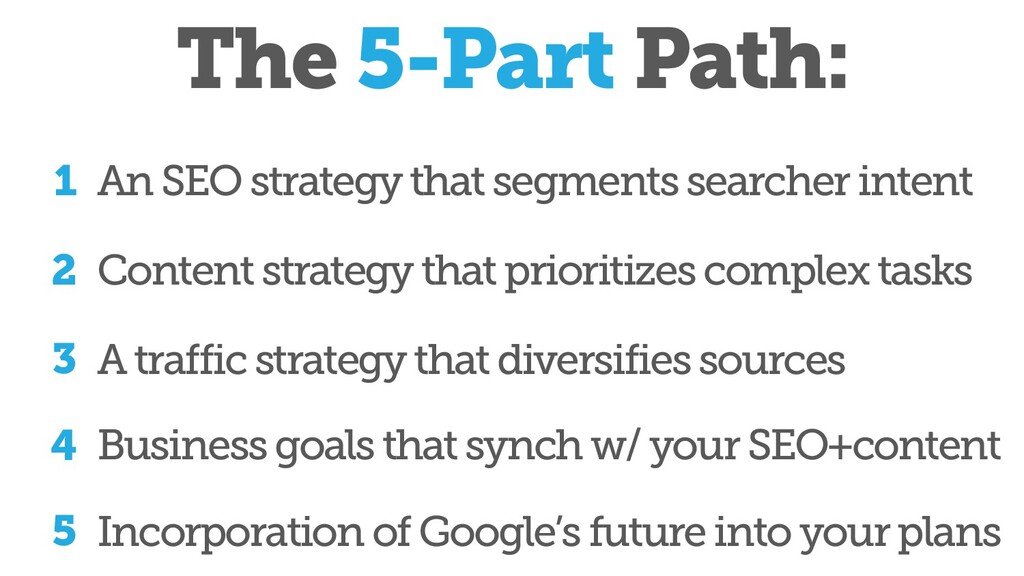
Hate that. So what's the what's the solution here? Like, how do we fight back against Google's Trojan horsing of the web? And I think when I've seen people have success against Google's infiltration of their results, I tend to see them do this. First, you're going to want an SEO strategy that segments searcher intent in specific kinds of ways.
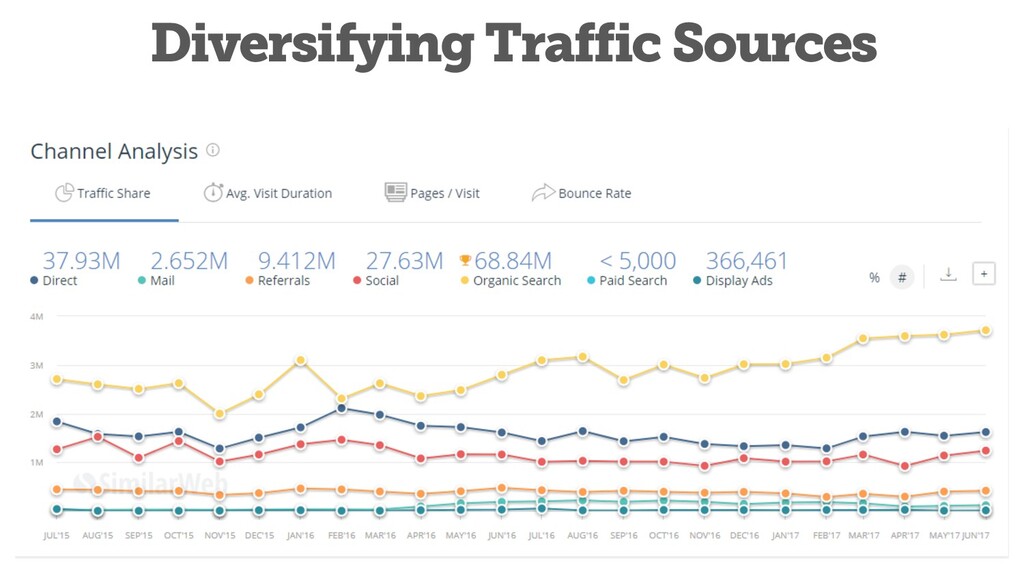
Remember Will was talking earlier about solving complex queries rather than simple ones? That is exactly what we wanna do. Second, some content strategy that's gonna prioritize those complex tasks over the simple ones. Third, a traffic strategy that's gonna diversify where your visits come from.
If you only get traffic from Google, you are always gonna be beholden to what they can do to you. And some business goals that sync with your SEO and content. We need to make sure that whatever we're doing matches up with what Google is gonna do in their future.
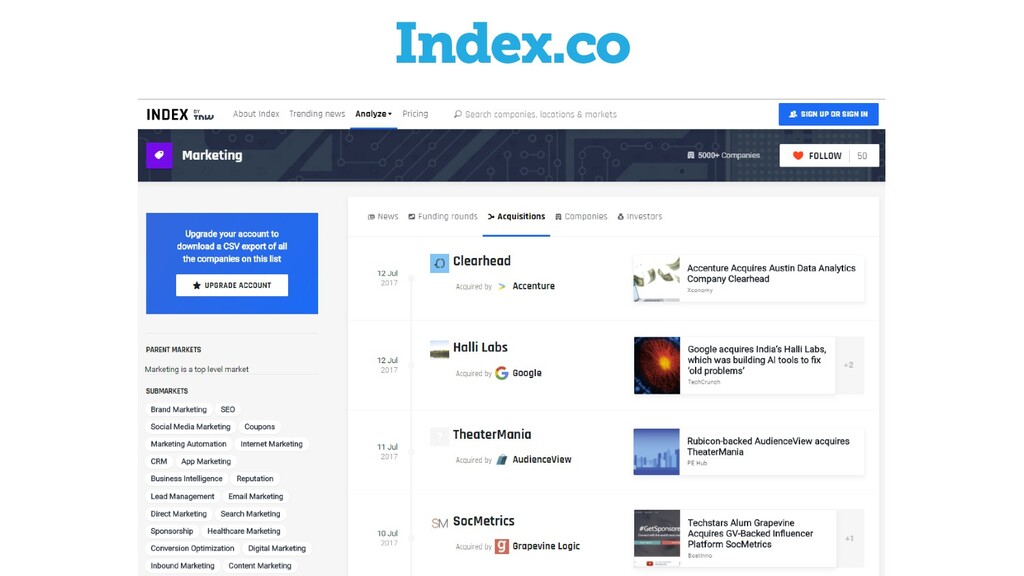
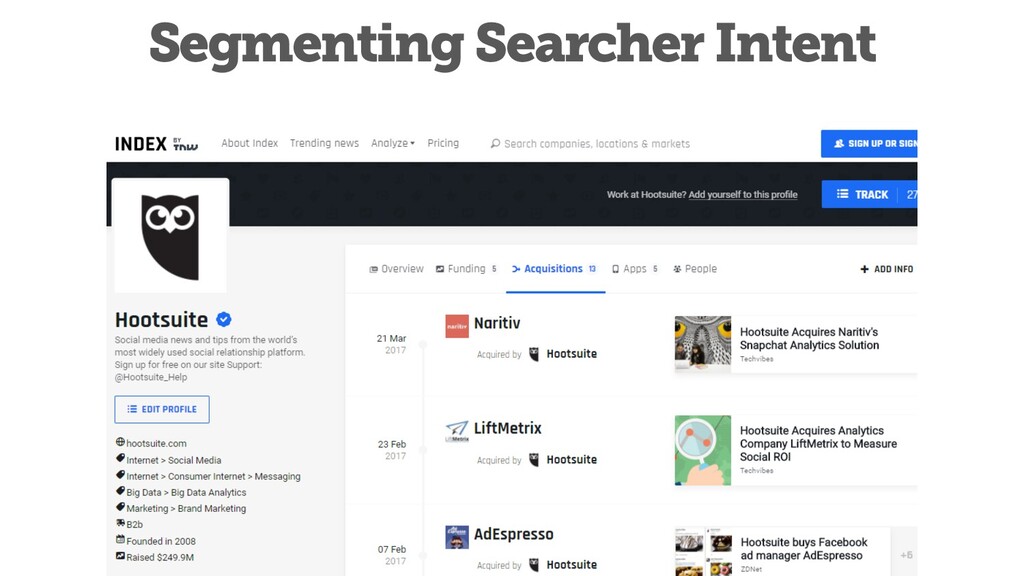
And that is part five. All right. Photos taken? All good? All right. Let's look at some examples. Let me show you some examples of this in action. All right. So here's index dot co. They track a lot of company data. They're sort of a b to b resource for investors and folks of all kinds in the startup space.
And they track acquisitions, and companies, and financings, and all this sort of stuff. And they do a phenomenal job of segmenting searcher intent. If you're looking for acquisitions, they've got a section for you. If you're looking for funding, if you're looking for company information, if you're looking for apps and tools that are provided, if you're looking for people, they serve the intent and they segment by each type of intent.
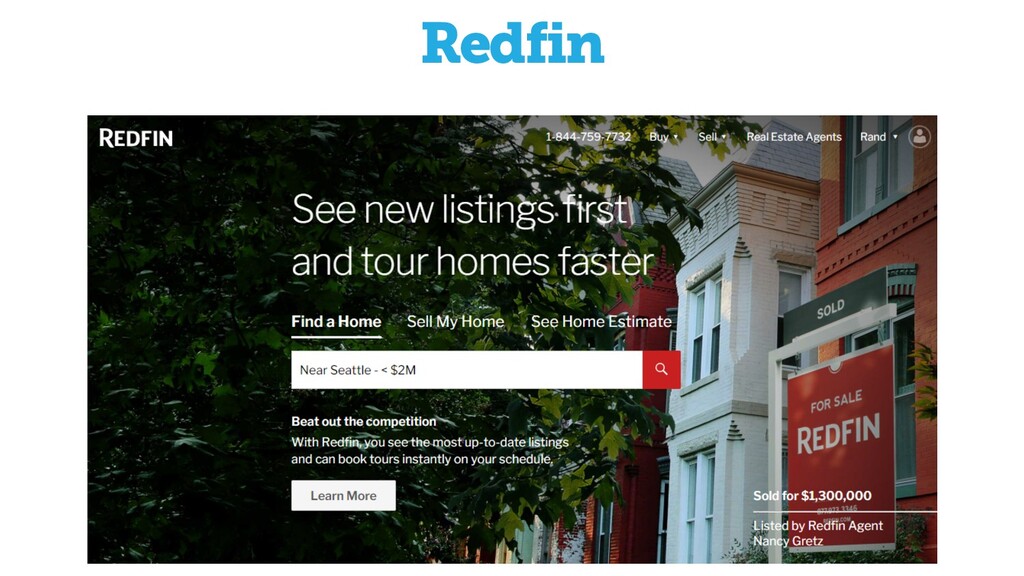
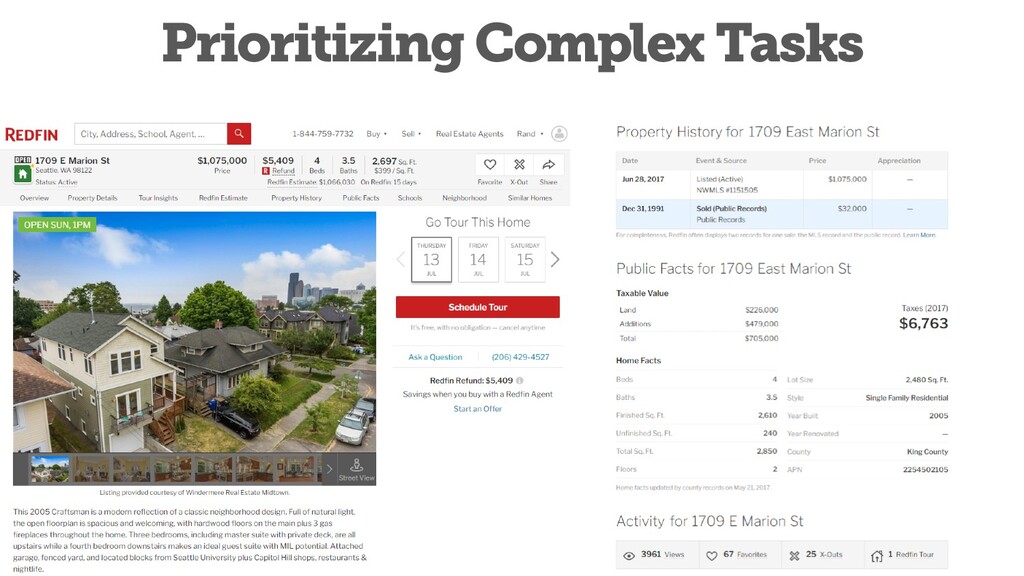
Here's Redfin, who I mentioned earlier with their mortgage calculator, and they do a great job of prioritizing complex tasks. Like I need to learn everything possible about a home before I go into it, which by the way is why a lot of real estate agents in the United States will tell you to sign up for Redfin and use the Redfin app to research houses rather than the app that they've got or just the website's listing, because Redfin does such a good job of providing all this
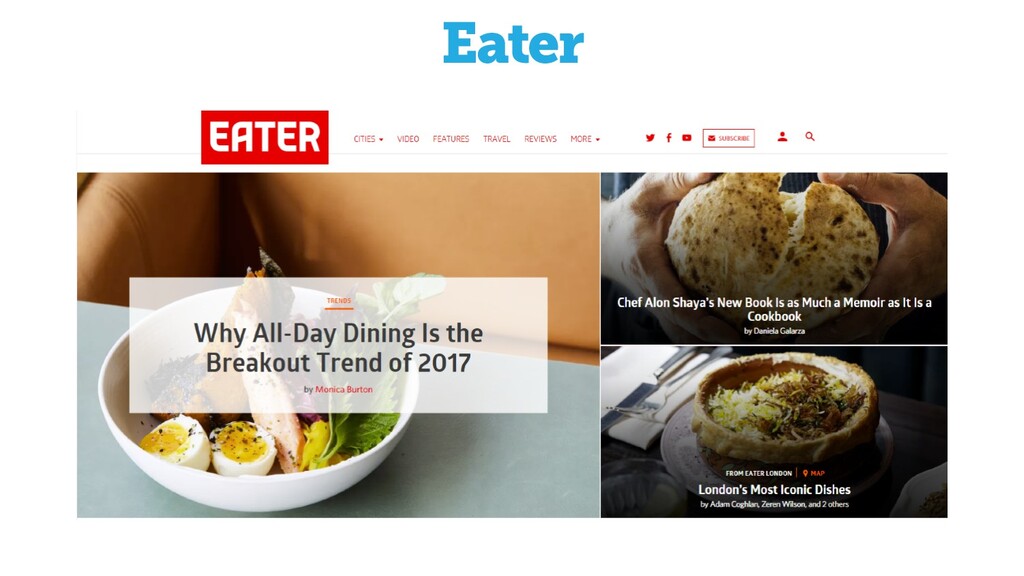
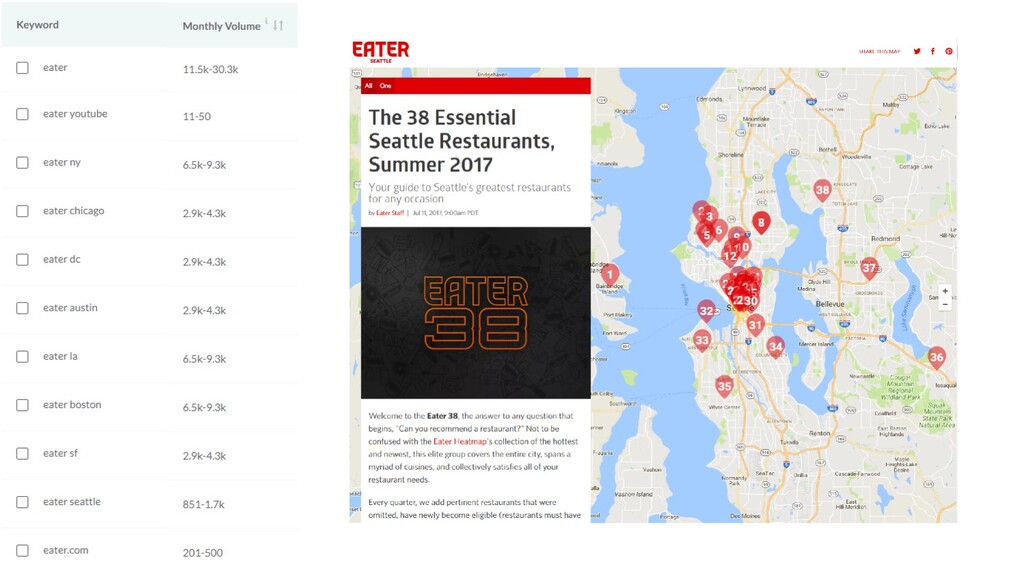
detailed information, including classes on buying homes, right, free classes, and when you can go tour them, right, that that stuff that takes you through steps that Google will never solve for you. Here's Eater, who's done a great job of diversifying their traffic sources.
In fact, they were doing such a good job that I think they actually sort of won too much SEO success. Because you can see they've kept growing all of these, but search has grown even faster because they've had, just so much link building success, so much keyword targeting success, all of that.
A bunch of that, by the way, is branded search. Because they've built such a brand that people want to visit, rather than just, Googling for, hey, want to know what restaurants to go to in Boston. People will Google Eater Boston or the Eater thirty eight, and they'll go to those.
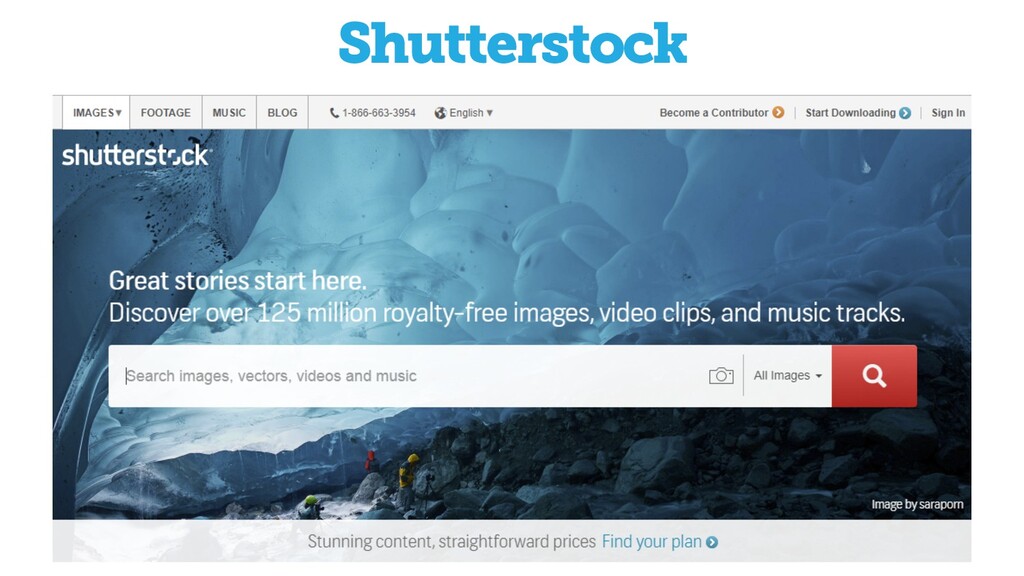
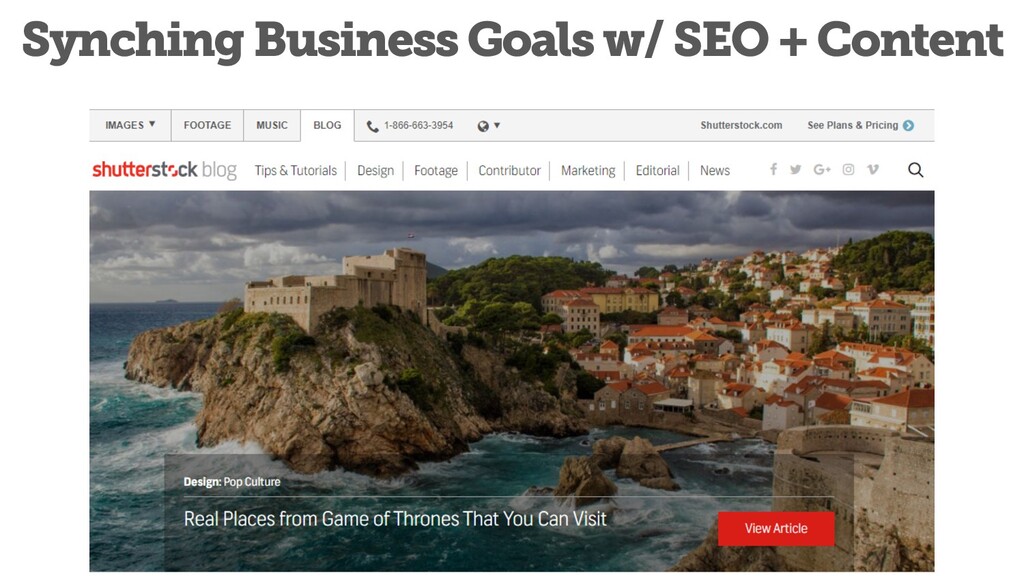
I know we all right? Those of us from the states are like, yeah, I just use Eater now. That's how I find stuff. Shutterstock, stock image provider, done a really good job with this business in a hyper competitive space. And they have been syncing up their business goals with their content marketing.
Right? So in this case, they've got here's places from Game of Thrones that you can visit. I apologize, I've never actually seen Game of Thrones, but I hear that I will get very addicted once I do, so I I don't have the time right now.
But in this case, right, they're doing sort of the click bait link bait thing, but they're also playing on the fact that I know that this is going to serve my interest, because when someone needs stock photos of these places, they're going to remember that I'm the place that they can go for it.
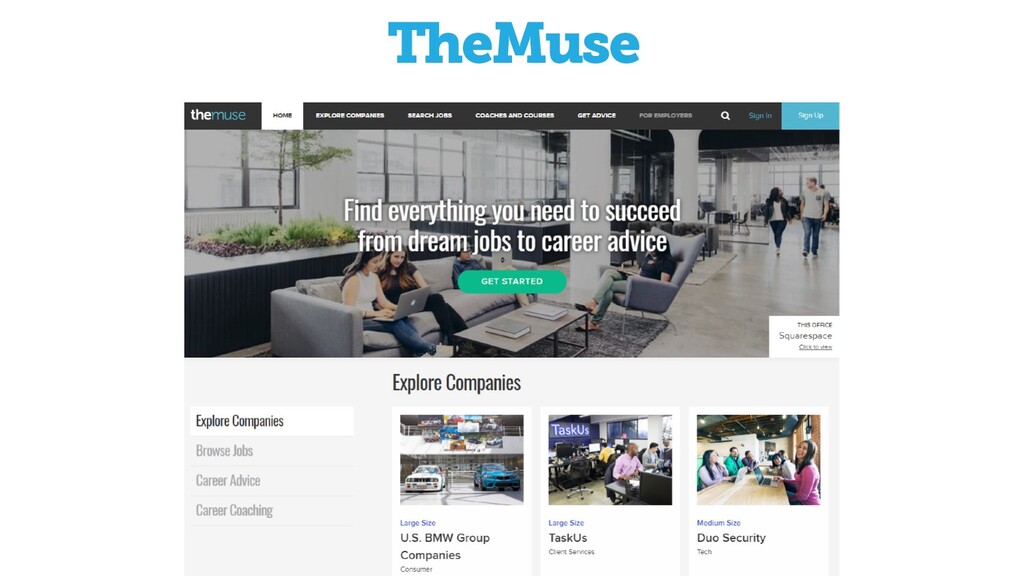
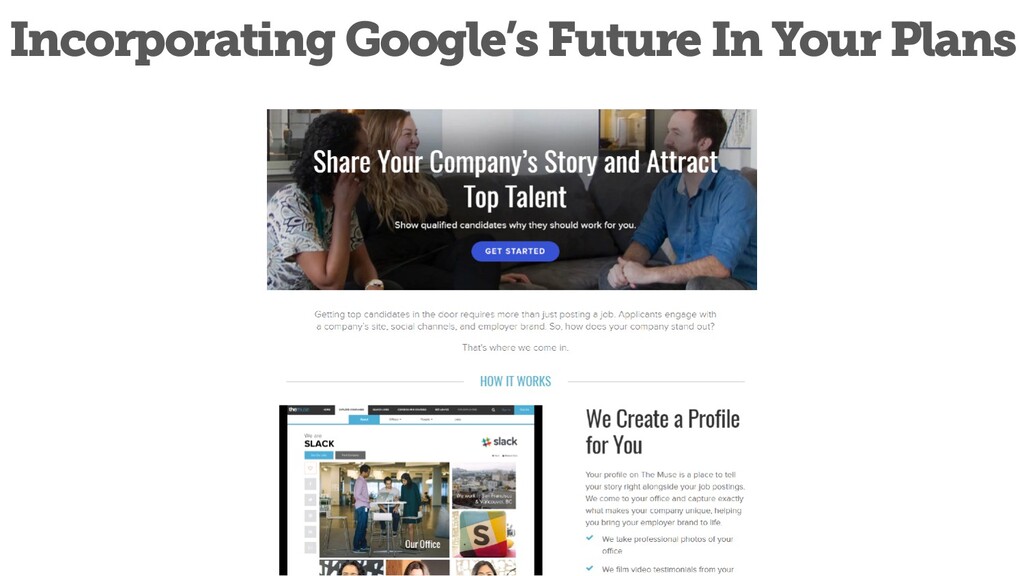
And lots and lots of people, presenters included, really like to use visuals from these things. Here's the Muse, which does a great job, of providing sort of a breakdown of companies that you can apply to. And what I love about the Muse, for their sort of a job search system, but a very customized job search system, is they say, hey, we know that Google is gonna provide job listings.
But you know what Google will never do? Google will never send an interviewer and a photographer to your company to talk to your staff and produce a big piece of content about what it's like to work there, they will create this profile for you.
And thus, companies start referring to their muse profiles rather than just their job pages. Right? So they're staying one step ahead here. Some tactical tips. And these are both to help you stay ahead in this in this Google Trojan horsing world, and also generally good for web marketing.
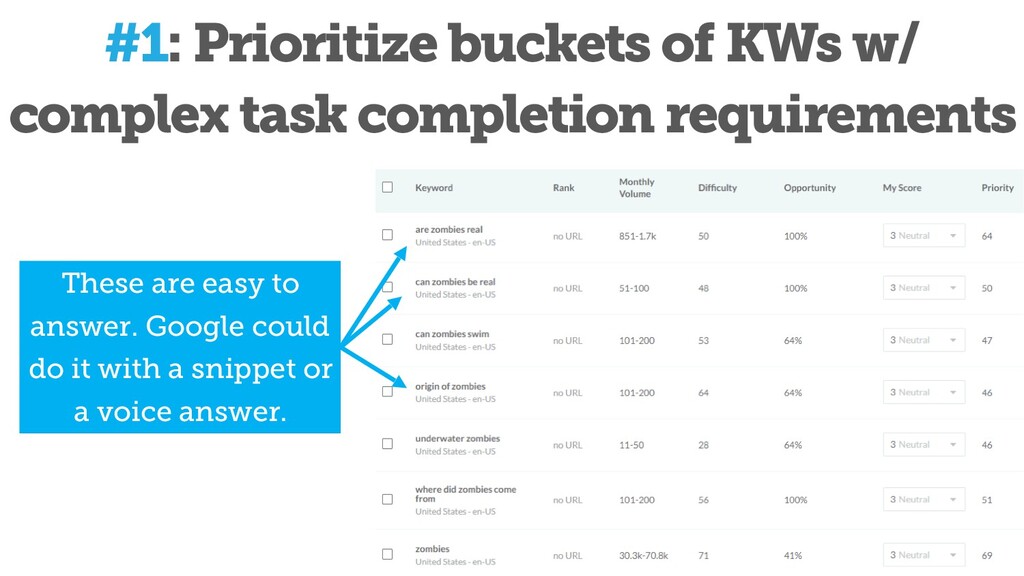
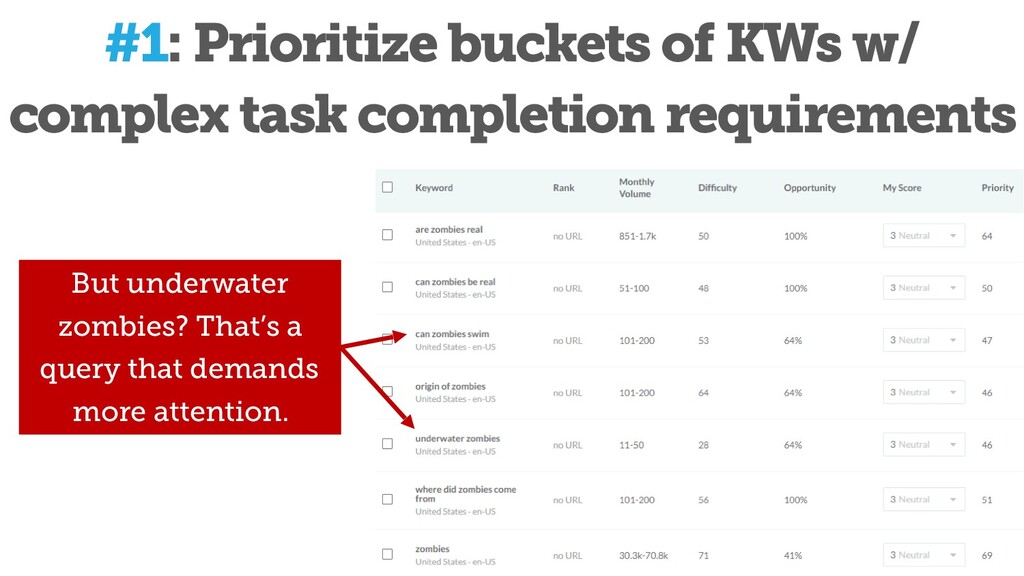
So let's kick it off. Number one, when I mentioned that prioritization of keywords, right, and the segmenting of search intent, what I'm urging is, let's say there's a zombie invasion, right? This is like a big concern in America. You can tell because something like forty percent of all American television programming is zombie centric.
But in this case, right, I'm segmenting my queries by what is Google gonna answer very quickly versus more complex queries, like underwater zombies and swimming zombies. I that you really need to dig into that problem. Right? That's not a just, are they real?
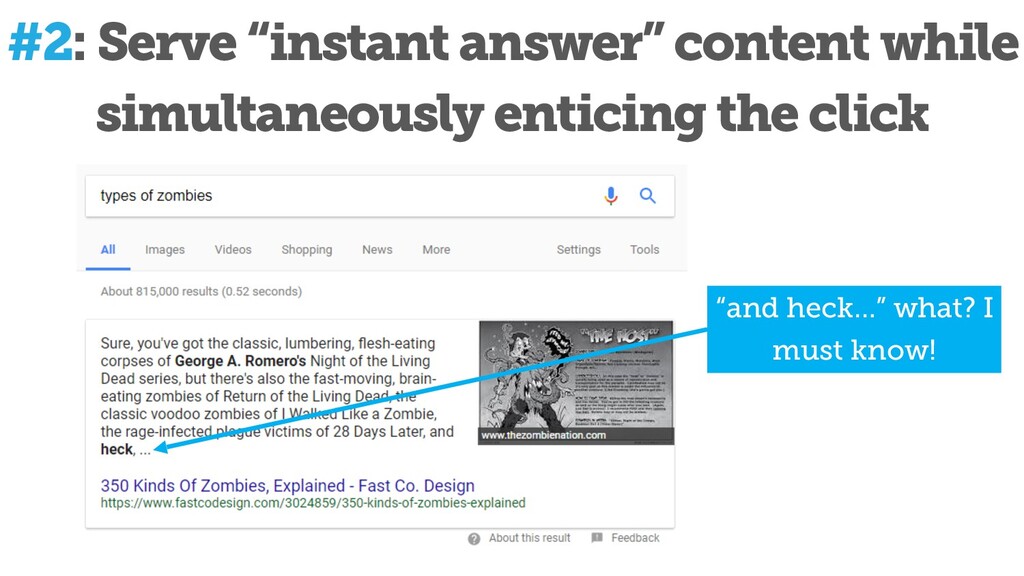
Where do they come from? When will they eat me? Eight PM tomorrow. Good to know. And in this case, right, I'm trying to serve instant answer content with stuff that's gonna make people click. So if I'm providing a list, I want the list to be incomplete when it shows up in Google's featured snippet, so that you have to click to get more.
Or in this case, you know, voodoo zombies of I Walk Like a Zombie, the rage infected plague victims of twenty eight days later, and heck, and heck what? Like, I got to know. I got to click. That featured snippet is not enough. It doesn't answer my query completely. I got to go there.
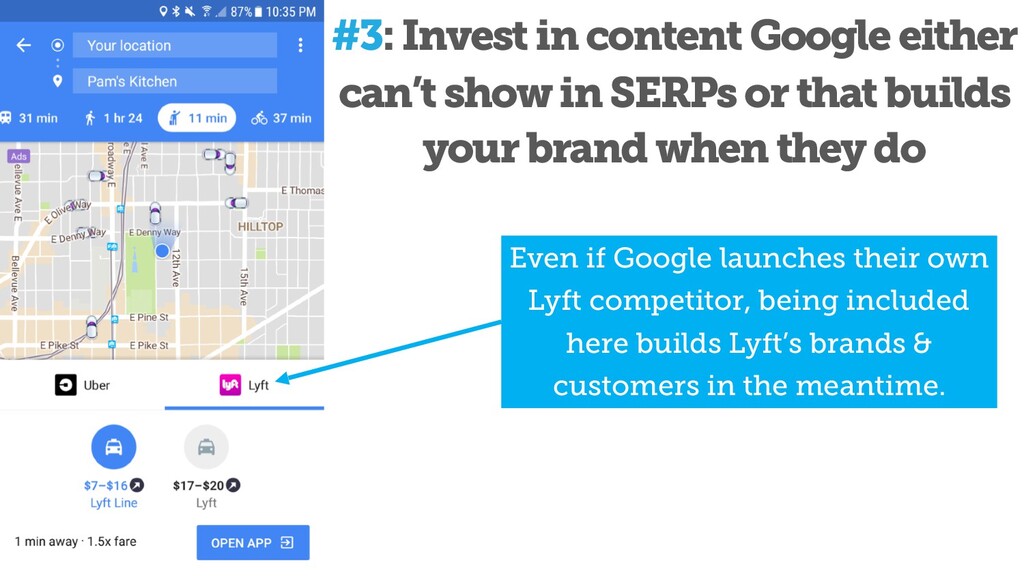
All right, number three. If you are going to partner with Google in some way, right? If you're going to work with them or provide them a schema or invest in AMP or whatever it is that you're doing that Google wants you to do, make sure that you're getting return value out of that.
In this case, Lyft and Uber are both working with Google. They've sub right? They've they've connected up their apps to Google's app. But they're doing it in such a way that they get value. Even if Google disintermediates them and Waymo, you know, takes over here, someday, Lyft has gotten value from being in those results for the foreseeable future.
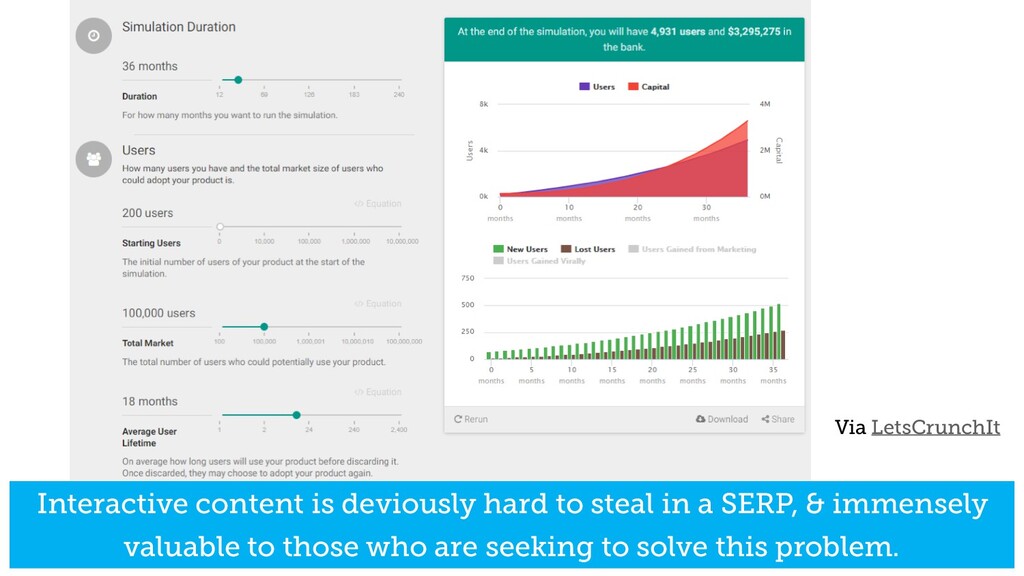
Right? For all the time that they had it, they extracted value from that integration. In this case, you know, we're I mentioned earlier about interactive content when we were doing the interview with Will. And I think that interactivity is one of the ways that content creation and content marketers, in particular, can get a lot more value from what they're doing with Google.
This one is a fantastic calculator. I don't know if any of you are in the startup world and sort of around the topics that we talked about yesterday. But in this case, you can actually slide and say, how many users do I think I'll acquire?
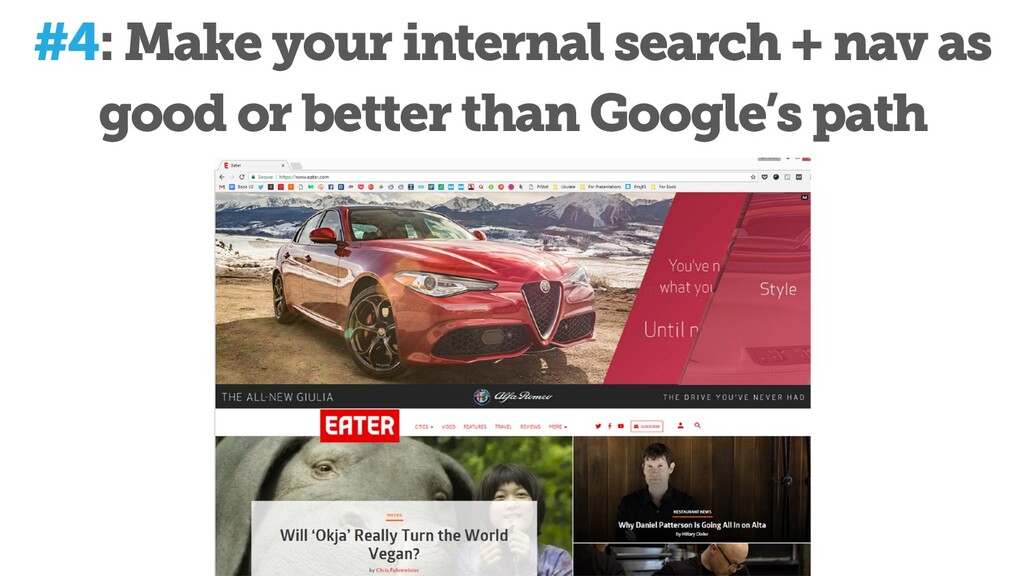
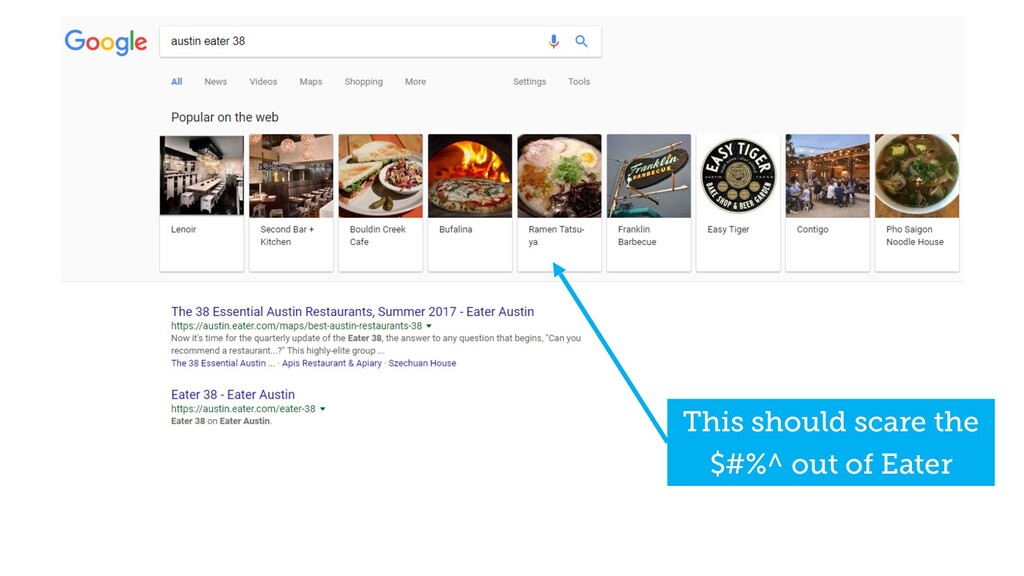
How fast will I acquire them? What's their lifetime value? And this is the kind of calculator Google is not going to disintermediate. Number four, I wanna make my internal search and my internal navigation as good or better than Google. So if I'm Eater, what I wanna see is not so much people searching for Eater thirty eight Boston.
I wanna see them just come to Eater and know that it's super easy to get where they need to go on my website. If I see that navigation path is broken or is difficult, I need to lubricate that. Right? I've gotta I've gotta make that as simple as possible so that people don't use Google as my site's navigation.
They use our internal search. And in this case, this is scary. If I'm Eater, I am nervous about this. Because they're taking my list. They're showing it right in the search results. That's that's training people to use Google instead of me. And I don't get the visits, and I don't get the traffic, and I don't get the ability to retarget, and I don't get the ad views.
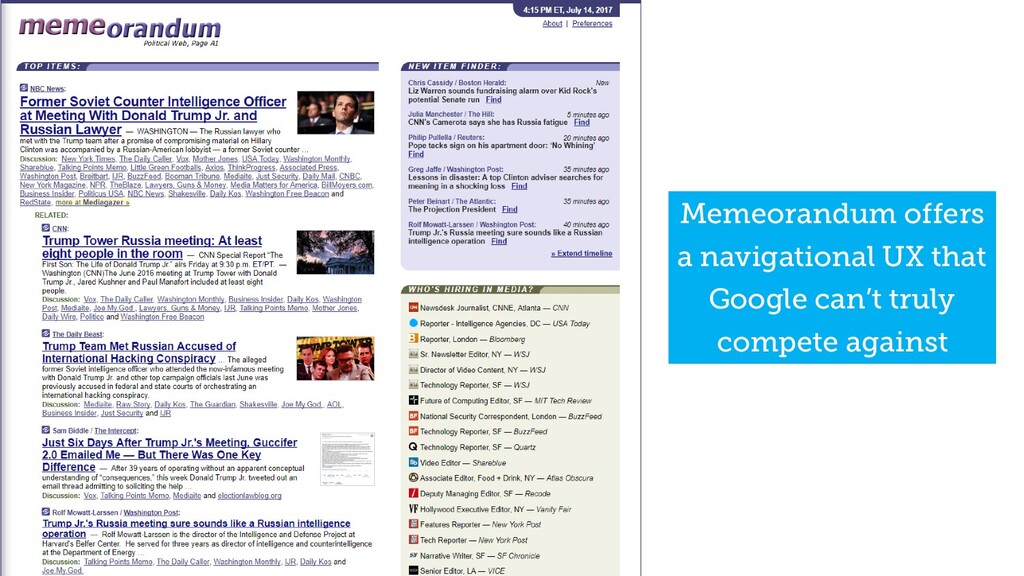
That's that's tough. Memorandum does a great job of this by saying, what does everyone need to know about politics, in this case American politics, right now? You know what? We can provide that. We can provide that in an interface that's better than Google News, that's better than anything Google could show in their search results.
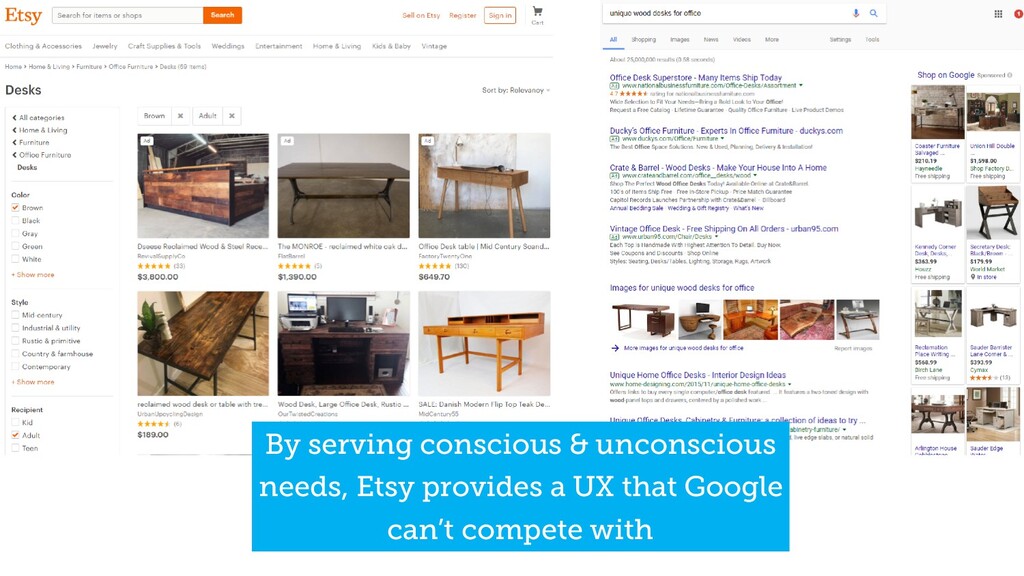
And people are going to bookmark it, and they're going to come back again and again and again because of our navigation and our user experience. Same story here with Etsy. Right? By serving both the conscious and unconscious needs of folks who are interested in craft items, Etsy can say, oh, I know what they're going to be looking for.
I know ways that they want to filter their searches, ways that they want to filter their results. And I can provide those in ways that Google just can't do. And you've seen, this week Google just announced the, the new image tagging systems where they're filtering in ways that are, well, really similar to Pinterest.
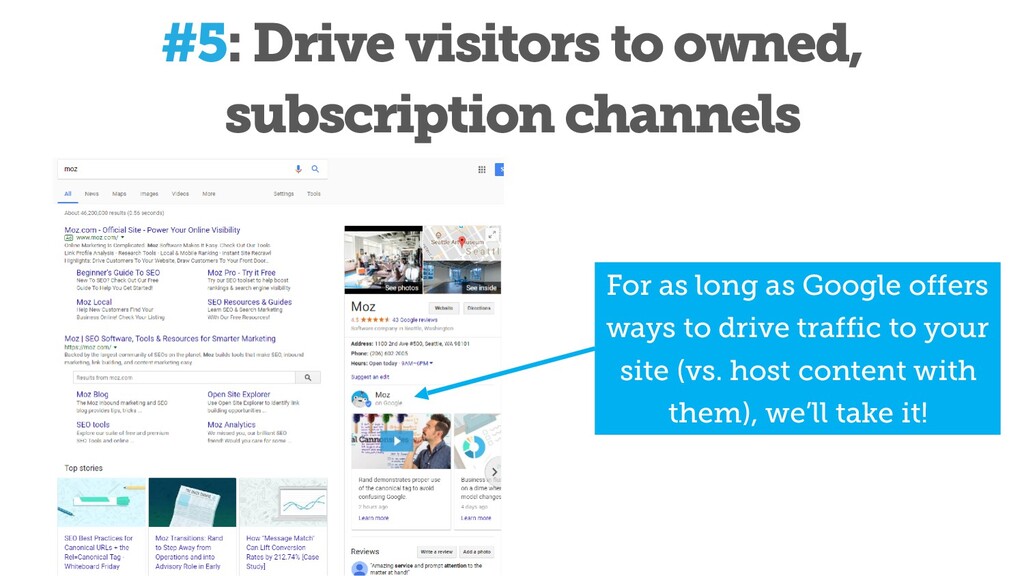
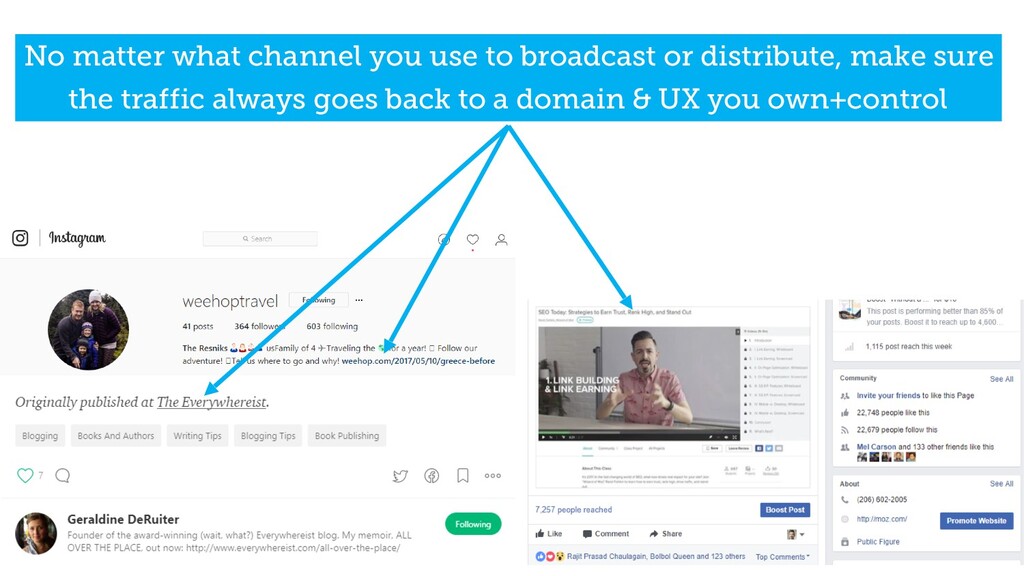
And I think Etsy is gonna have to stay one step ahead of that. Number five, own your traffic. Own your traffic, right? Don't if you're gonna invest in any other I don't care whether it's a channel like SEO, or paid search, or Facebook, or Twitter, or LinkedIn, or Instagram, or Snapchat.
Whatever it is, drive people to your site. Tease whatever you've got on your domain so that you can own that content. If you're doing podcasting, drive them back. If you are contributing to other websites, in this case I, you know, filmed a video in New York with Skillshare, I'm doing that.
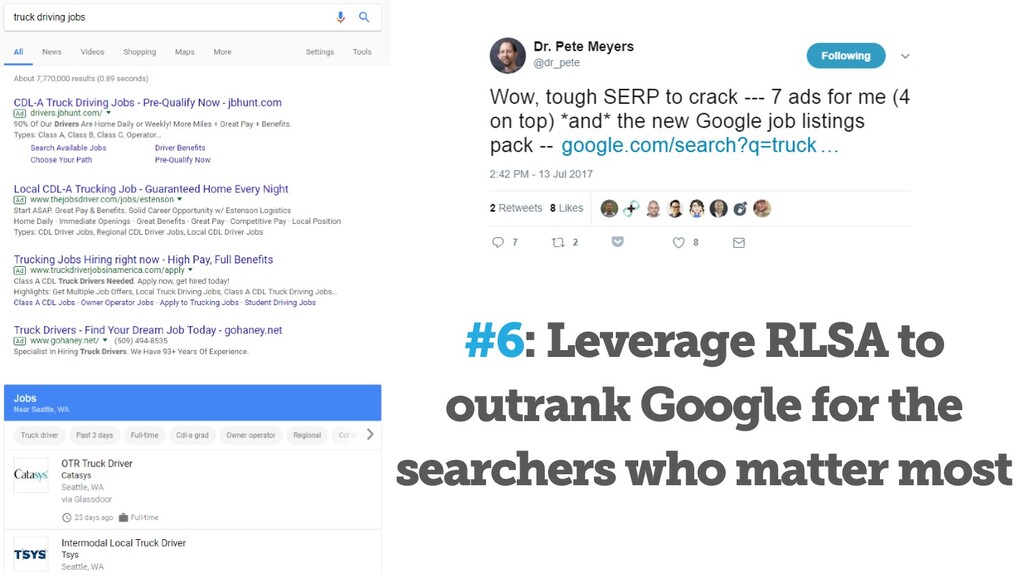
I invested like a whole day in doing that and a bunch of training stuff, but I'm getting value from it because people are being driven back to my site. Right? I own the traffic. I'm just using everyone else's channel as a thoroughfare. Number six, if you wanna outrank Google in cases where they are putting sort of their own results first, paid is a great way to do that.
An even better way to do that, well, an even cheaper way anyway, is if you can if you are already capturing the IPs, right, and the and the cookie users, and the email addresses of some of your audience, you can use RLSA, remarketed lists for search advertising, to be in front of those specific people who have a more likely odds of converting anyway because they already know who you are, they like you, they trust you, and you can outrank Google with the paid search results just
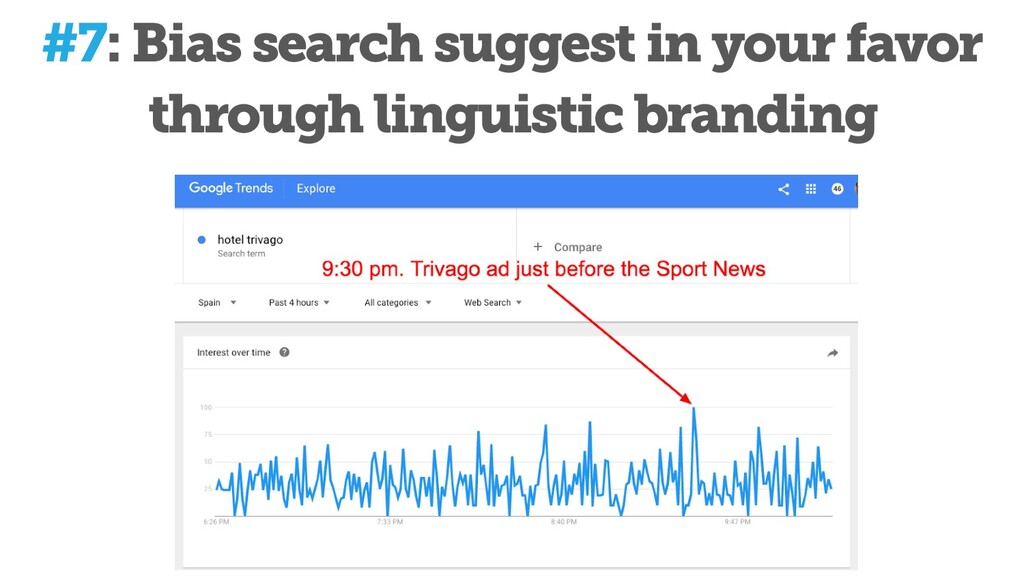
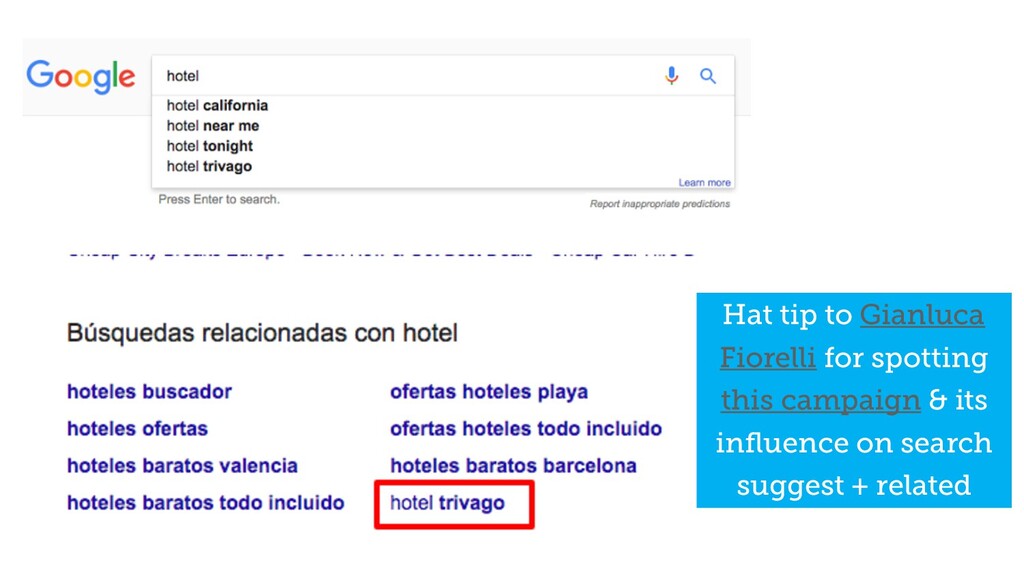
for the audiences you care about most. Number seven, if you would like to, there are ways to influence search suggest. And branding campaigns are one of the best ways to do that. So this is trivago here in Europe. Sorry, here in Europe? And trivago basically ran a bunch of advertising suggesting that you perform queries in Google for them.
So it was Hotel Trivago, right? I think that was the search query, but it was in Spanish, if I recall correctly. Credit to Gianluca Fiorelli for identifying this one. And here in this case, right, big spike in searches, instant results in the search suggest and related searches.
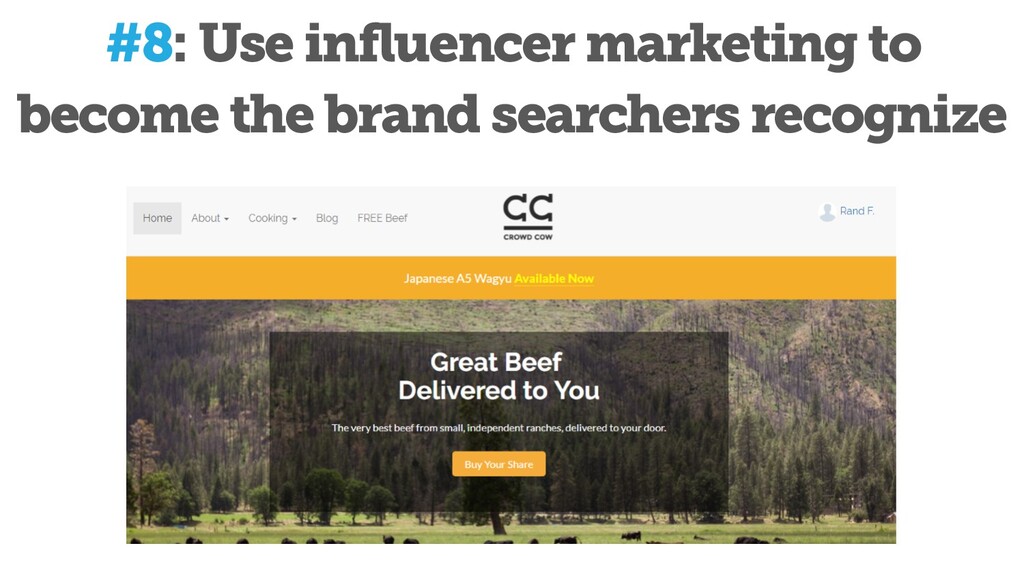
And that is a beautiful thing, right? Because now I get to be in front of searchers with my brand, even when they're only searching for the unbranded term, which is awesome, right? Because what I prefer is them searching my brand. Number eight. If you're gonna do, marketing, one of the marketing, one of the things I recommend is trying to get in front of the people who influence your audience.
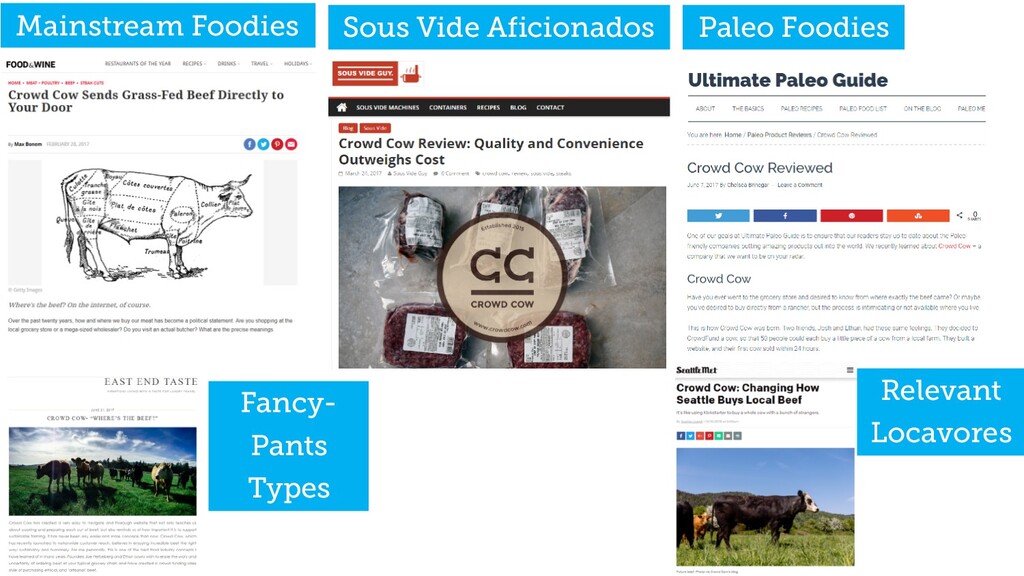
I don't just mean influencers like, you know, YouTube celebrities or or, highly followed Instagram folks. I I mean all sorts of influencers. For for Crowd Cow, these folks here who sell beef online, they did this in a really smart way. They basically went out and they said, okay, well, you know, I know that one of the folks we're trying to one of the audiences we're trying to reach is mainstream foodies.
Right? People who who care a lot about good food. So we're going to go to Food and Wine magazine. We're going get in front of them. And we also care a lot about, sort of these folks who are obsessed with their sous vide devices because sous vide with fancy beef is one of the best ways to do that.
So we'll get in front of the sous vide guy. And, you know what? We also wanna reach those paleo folks because they eat a ton of beef. Paleo, you can't eat anything except protein and vegetables? Something else. And then oh, we can get in front of those, I don't know what to call them, fancy pants types. Right?
Like rich people who like new things because they're new and fancy. So we'll go to East End Taste. And then we'll go to Locovores too, right? Because we reach all these different audiences. They identified all the people who influence their various audiences, and then they go target each one of them.
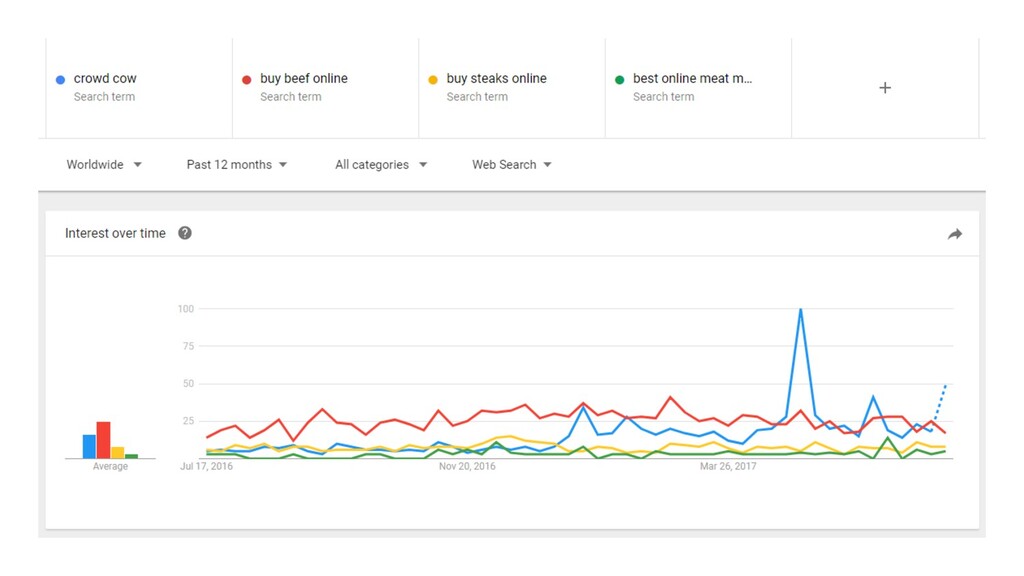
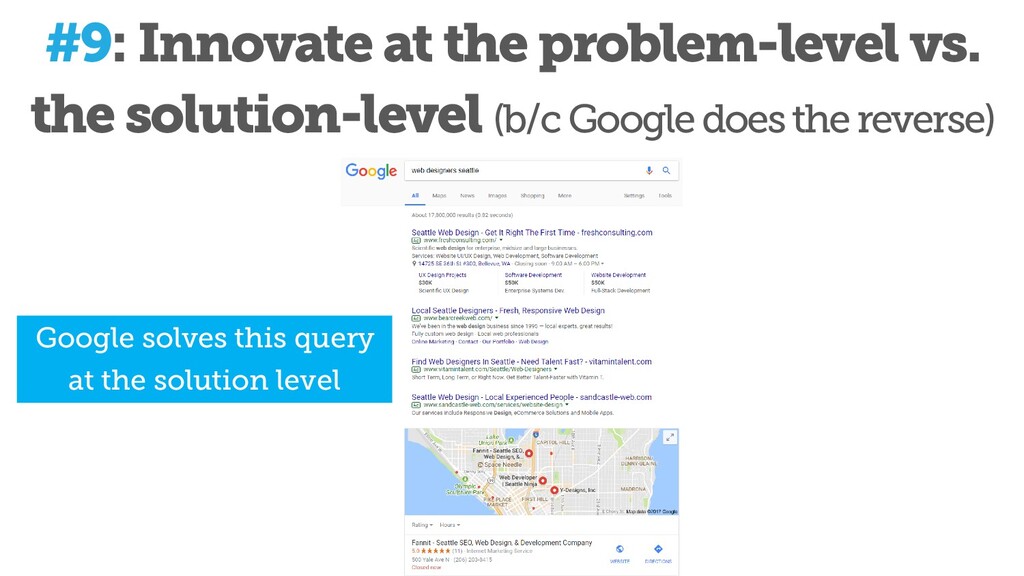
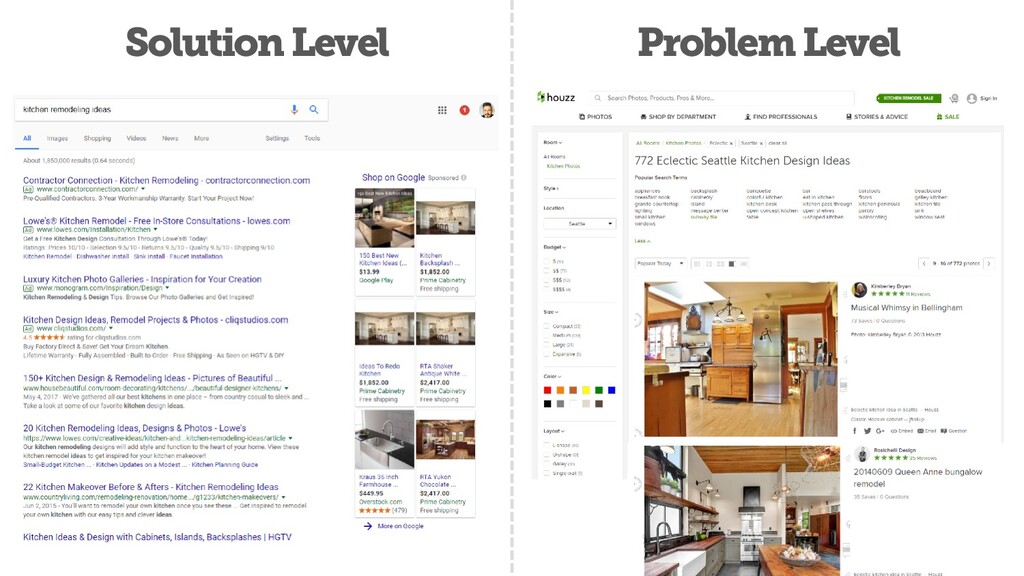
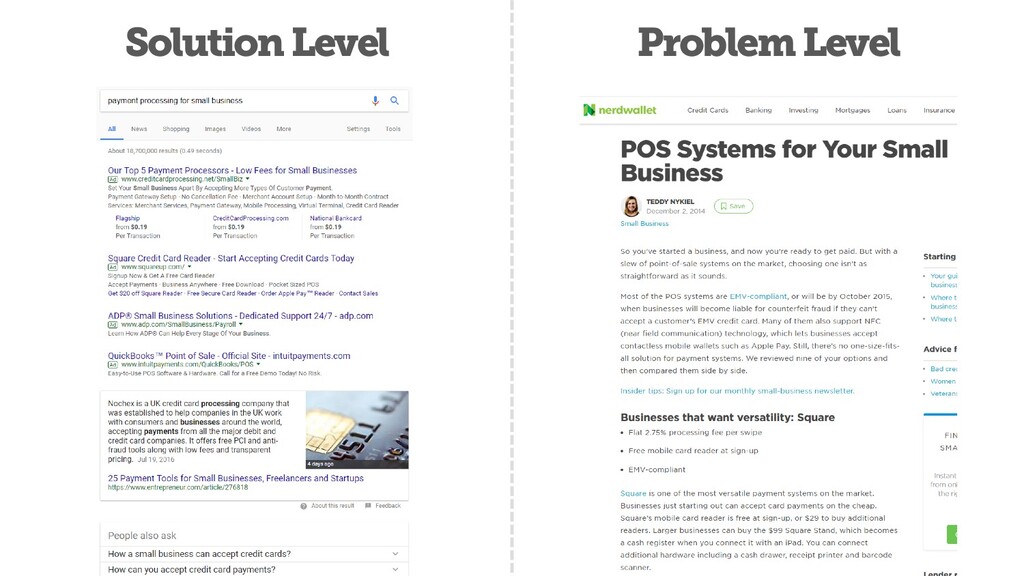
And as a result, over time, they built up such a brand that, look, now they actually get more search volume than the generic term of buy beef online, buy steak online. Pretty awesome. Very impressive. Number nine, penultimate here. I'm gonna urge you to invest in web marketing at the problem level instead of the solution level, because Google does the opposite of that.
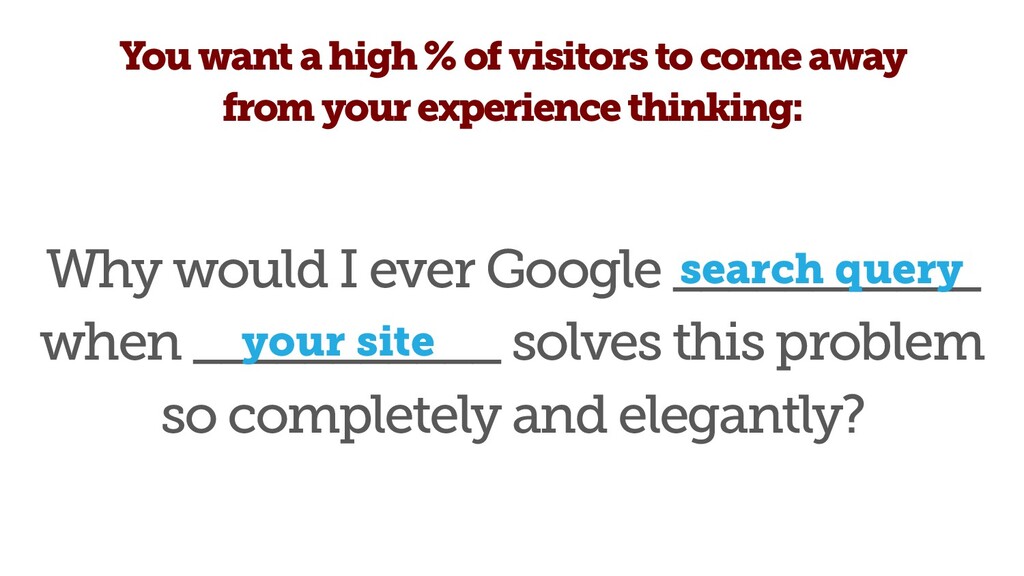
Right? So here's what I mean. You want a high percent of visitors coming away from your experience and thinking, why would I ever Google for this term when I could just visit your site to solve that problem? If you can get people saying this, you have won.
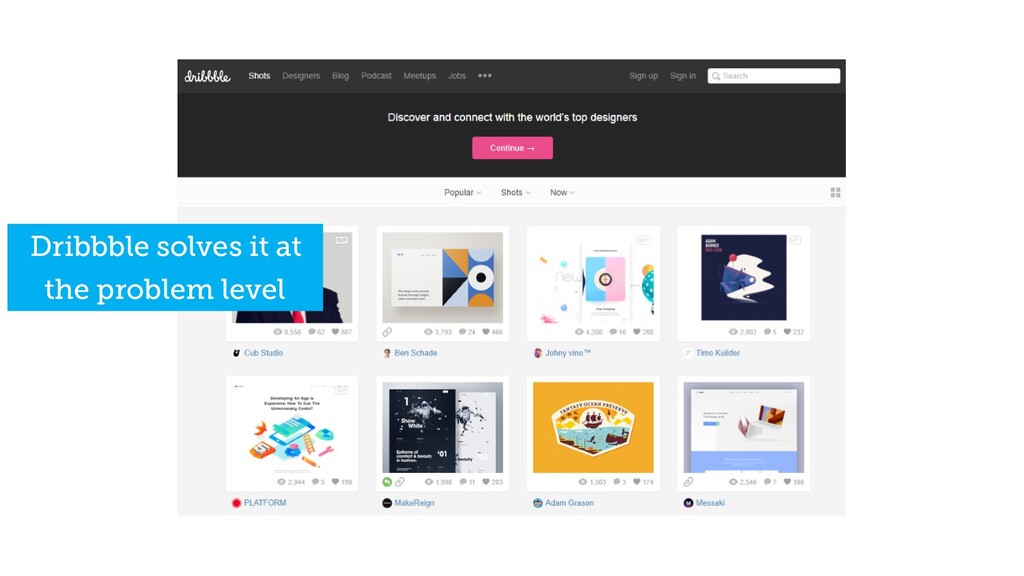
You have fought off Google. Here's an example. Right? Dribbble, they're they're solving that that same search they showed you at that problem level. Not just a solution. I'm going to help you with the full range of problems. Here's all the designers. Here's all the people.
Before your audience needs a solution, they have a problem. Right? And that's why they Google. Beat Google to the punch. Be there for problem discovery. Here, a couple examples. Solution level. Right? This is Google providing just the solutions. I search for kitchen remodeling ideas.
Google's giving me a bunch of results for kitchen remodeling ideas. But if I go to House, I can experience the idea of, oh, yeah, I might want to maybe someday remodel my kitchen. And here's all the ways I'm thinking about it. And here's all the people I could use, and here's all the services I could do.
Great. Payment processing for small business. Well, there's a bunch of solutions, but here is NerdWallet talking about the problems that a new business will face, including payment processing. And as NerdWallet builds their audience, they get people before they ever realize that they have this problem, and thus they answer it.
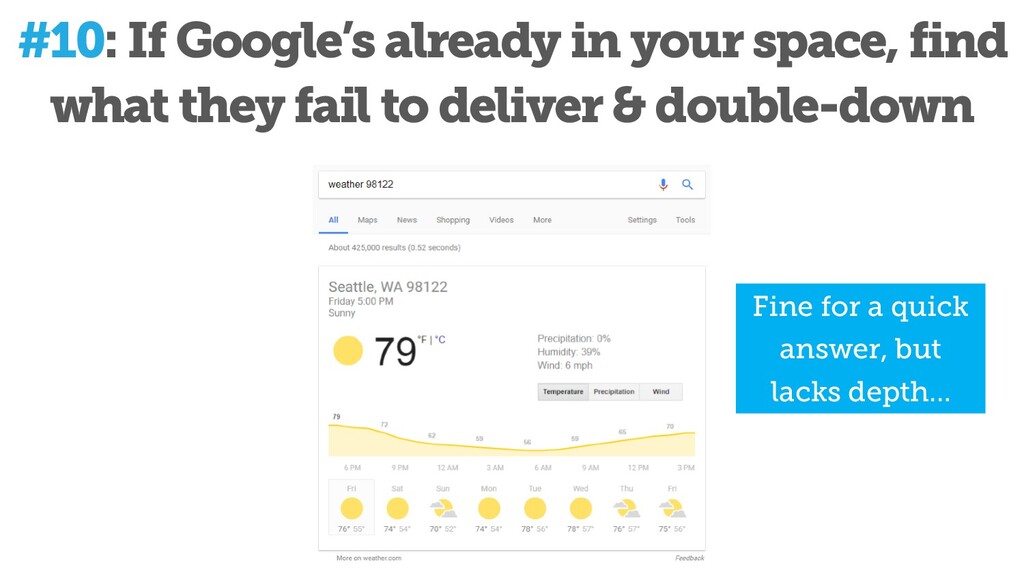
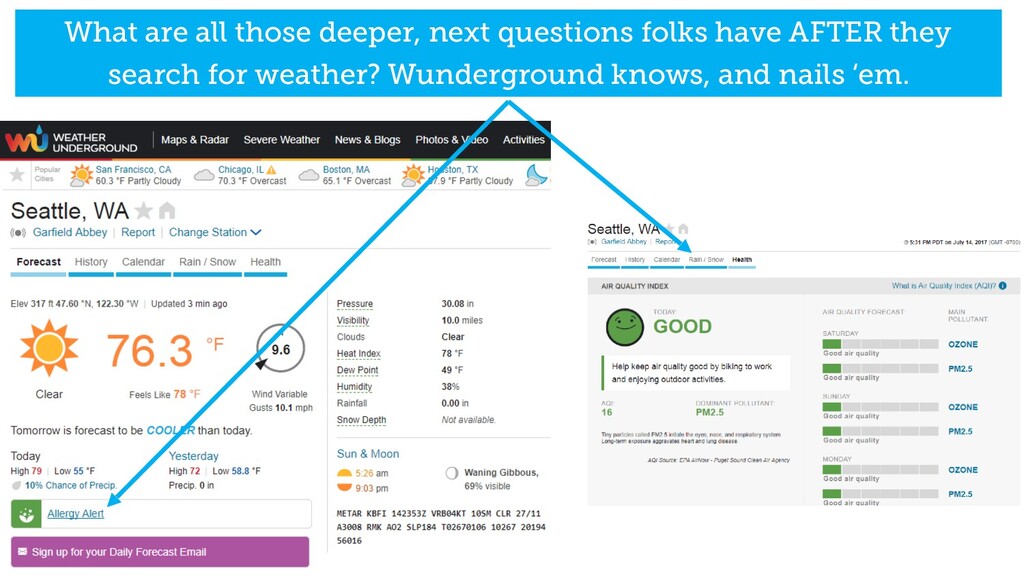
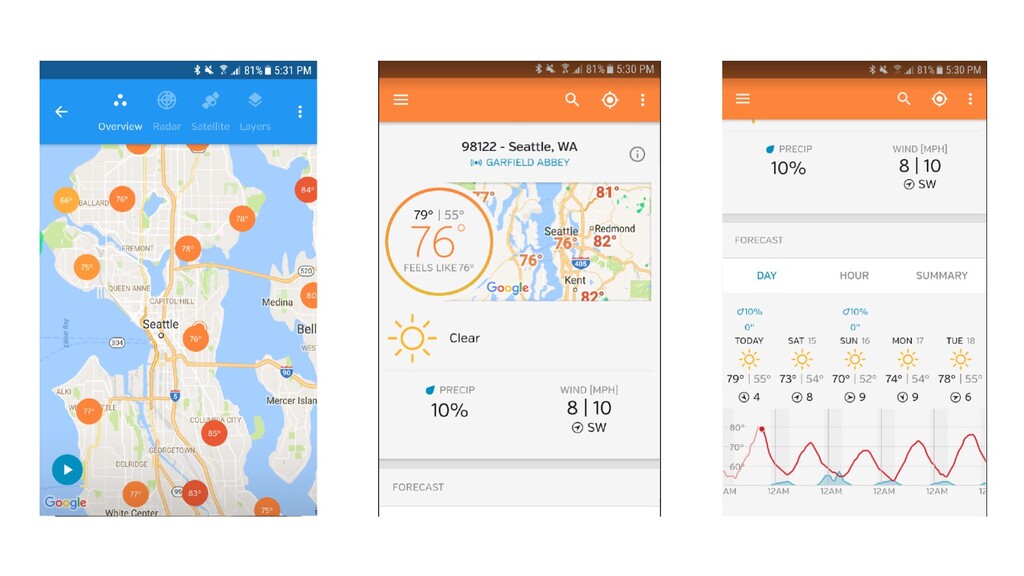
Last but not least, if Google is already in your space, find where they're failing to deliver and double down. So in this case, you know, Google provides basic weather information, But it's not very good, and it's not hyper localized, and it doesn't include a lot of the things that many of us would want to know about weather, particularly important in Scotland.
Is it going to be raining in four minutes or three? Spoiler alert, both. In this case, Wonderground doing an awesome job of basically taking all the problems around weather that Google is not answering and providing those both in their app and on their website.
And I love that. This is the app which I've installed on my phone, and now I don't Google weather anymore. I just use Wonderground's app, so they get to serve their ads, they get to win. With these ten, we don't just have to fight off the dragon.
We can make it fly us around the skies. Thank you very much.